Poetry Insurance

“Temperance” from the Lo Scarabeo Tarot

I’ve been thinking a lot about balance, lately. About how I can devote the time necessary to writing, and still go to work, earn a living…essentially, how to “pursue my passion” without abandoning adulthood entirely.

Which brings me to Ted Kooser and Wallace Stevens. I’ll start with Ted Kooser: he’s a former VP at an insurance company called Lincoln Bankers Life. He was also the U.S. Poet Laureate from 2004 to 2006. He managed the job/passion balance for a long while—by the time he retired from the insurance industry, he had published seven books of poetry.

Wallace Stevens was another poet insurer, but from a different age. He was born in 1879, and died in 1955. And, apparently, he never retired. He worked as an insurance executive in Hartford, Connecticut for most of his life. He was also awarded the Pulitzer Prize for Poetry in 1955. That same year, Harvard offered him a faculty position, but according to Wikipedia, he declined it “since it would have required him to give up his vice-presidency of The Hartford.”

Speaking of working in a different era, regarding the insurance industry connection, Ted Kooser reportedly quipped: “Stevens had far more time to write at work than I ever did.”

Kooser would write in the morning before going to work (like me. Or like I’m supposed to be doing). Writing time of day aside, I certainly find more in Ted Kooser’s profile to identify with than Wallace Stevens’s. Stevens traveled to Key West quite a bit, where he’d tussle with the likes of Robert Frost and Ernest Hemingway. And when I say tussle, I mean it in the corporeal sense—he evidently had several arguments with Frost, and at least one physical altercation with Hemingway.

If I were to dust up with current literary giants while on vacation, I’m pretty sure it would be all over social media. I’m also 100% certain I’d lose my job.

So I’m back to identifying with Ted Kooser. His Wikipedia page is pretty light on famous fights. He’s now 78-years-old, and still working that balance. While he’s retired from insurance, he’s the editor of a national newspaper column, “American Life in Poetry.” His poetry seems really accessible, and he also seems like someone you wouldn’t mind knowing in person.

This poem from Ted Kooser struck several emotional chords with me, so I thought I’d share it. Maybe one day my early morning writing sessions will yield something half as poignant:

Father

Today you would be ninety-seven
if you had lived, and we would all be
miserable, you and your children,
driving from clinic to clinic,
an ancient fearful hypochondriac
and his fretful son and daughter,
asking directions, trying to read
the complicated, fading map of cures.
But with your dignity intact
you have been gone for twenty years,
and I am glad for all of us, although
I miss you every day—the heartbeat
under your necktie, the hand cupped
on the back of my neck, Old Spice
in the air, your voice delighted with stories.
On this day each year you loved to relate
that the moment of your birth
your mother glanced out the window
and saw lilacs in bloom. Well, today
lilacs are blooming in side yards
all over Iowa, still welcoming you.

from Delights & Shadows, Copper Canyon Press, Port Townsend, WA 2004

You can find out more about Ted Kooser here: www.tedkooser.net


We’ll never have Arnhem?

It’s been a while since I’ve written about movies. They’re one of five categories I use on this blog, (I don’t count “Uncategorized” as a category) and I feel like it’s been somewhat neglected lately. So, time to correct that.

I watched A Bridge Too Far for the first time, just a few nights ago. This WWII movie, directed by Richard Attenborough, came out in 1977. It’s loaded with actors, an “all stars of the 1970s” cast: Sean Connery, Michael Caine, Laurence Olivier, Anthony Hopkins, Robert Redford, James Caan, Elliott Gould, Maximilian Schell. It being a war movie, there didn’t seem to be many roles for women—I think Liv Ullmann is the woman with the most screen time. She plays the owner of a house in the Netherlands where a bunch of wounded Allied soldiers crash.

Two casting choices had me scratching my head a bit—Ryan O’Neal as a baby-faced Brigadier General, and Gene Hackman as a Polish Major General. He spoke with an accent that felt mildly Eastern European.

It’s a looong movie, clocking in at nearly three hours. I fell asleep for a while in the middle of it (my couch is really comfortable). But I caught enough to get the gist of it. I thought the ending was really strong, so I was glad I was awake for that part.

A Bridge Too Far is based on Cornelius Ryan’s book of the same name. (William Goldman did the screenplay. Why does that name sound familiar? Because he also wrote The Princess Bride 🙂) Anyway, A Bridge Too Far tells the story of Operation Market Garden, a failed attempt to break through German defenses in the Netherlands, roughly three months after D-Day. In the Allies’ effort to secure the bridge in the Dutch town of Arnhem, a whole lot goes wrong.

At the end of the movie, British general Urquhart, played by Sean Connery, meets up with his superior, Lt. General Browning (played by Dirk Bogarde). Urquhart tells him how he went in to the mission with 10,000 men, and came out with less than 2,000. Browning tells him how Field Marshal Montgomery, who devised the whole plan, is calling Operation Market Garden “90 percent successful.”

I was pretty stunned by that. And suffice it to say, Montgomery does not come off well at all in A Bridge Too Far. It’s also pretty interesting that Montgomery is not portrayed in the movie (unless he showed up while I was sleeping). For what I saw, his orders are represented through Browning, who was the one to tell Montgomery before the operation, “I think we may be going a bridge too far.”

It all got me thinking about WWII in a different way. My schooling gave me, really, just a cursory knowledge of  WWII, from just the American perspective. I like to think that my understanding has grown over the years, much of it gained through movies. Earlier this year, it was Dunkirk that had me looking at history from different angles.

Dunkirk was in theaters this past summer. It, by contrast, is less than two hours long, and I did not fall asleep. While the details are not as fresh to me as A Bridge Too Far, I came away from Dunkirk thinking about this: all the really bad stuff that was going on in WWII long before the United States ever got involved. (The events depicted in Dunkirk happened in May 1940). And how insurmountable the odds seemed for the Allies. From that point of view and point in time, the eventual Allied victory was far from a “given.”

Casablanca always gets me thinking about that uncertainty, too—especially because it was made and released years before the war ended!

Anyway, I’ve probably yammered on enough about war movies. From the perspective of a writer who’s trying to improve her story telling, I found a lot to be gleaned from A Bridge Too Far, some from Dunkirk, and don’t get me started on Casablanca. That one’s a gold mine.

Louisiana Book Festival

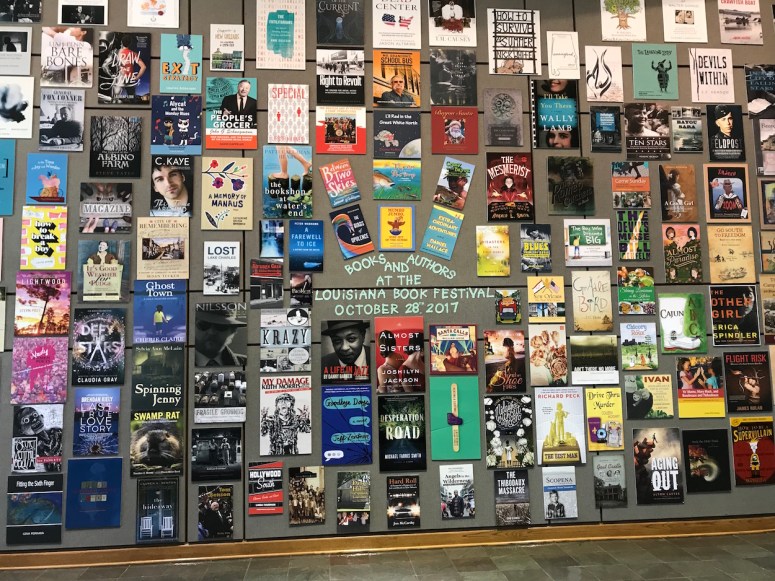
Each autumn, the State Library of Louisiana puts on the Louisiana Book Festival at the State Capitol grounds in Baton Rouge. Weather in Southern Louisiana can go one of two ways in October—unseasonably warm and muggy; or, what most people down here look forward to each fall—seasonably cool, moderate temperatures. We were fortunate to have the latter this past Saturday. It was a blustery day and I don’t think it got above 60 degrees, one of the first really cool days of this 2017 fall season.

I made the seventy-six mile trek up to Baton Rouge with my writing friend Samantha (she drove). For me, some highlights of the day were:

  • William Joyce: He’s primarily a children’s book writer, but I know him as the artist behind The Fantastic Flying Books of Mr. Morris Lessmore. This incredibly moving short film won an Academy Award in 2011.  We heard him speak in the House Chamber of the State Capitol building, which is a really cool thing about this book festival—the venue.
  • Michael Farris Smith: He spoke in the Senate Chamber, and I bought his book Rivers. It’s a dystopian story I’ve heard a lot about. From the back jacket copy: “Due to years of catastrophic hurricanes, the Gulf Coast has been sealed off by a government-drawn boundary called the Line. Those who remain below the Line live hand-to-mouth in this lawless, unforgiving land.”
  • Karen L. Cox: A professor of history at UNC Charlotte, she just released a book entitled Goat Castle: A True Story of Murder, Race, and the Gothic South. It’s about a notorious murder that took place in Natchez, Mississippi in 1932. The only person to go to prison for this murder has been largely forgotten by history. She was overshadowed by some whacked-out characters (who didn’t go to prison, despite their guilt), who captured the nation’s attention at the time and capitalized on their notoriety. Karen Cox gives some dimension to poor Emily Burns, the woman who was convicted as an accomplice and who did go to prison. The context is that this woman was hanging out with the wrong person, at definitely the wrong place, at the wrong time.
  • Hidden Figures: speaking of speaking up about the things history forgets…I received a free copy of Hidden Figures: The American Dream and the Untold Story of the Black Women Mathematicians Who Helped Win the Space Race. The book by Margot Lee Shetterly (that inspired the movie of the same name) is the 2018 “One Book, One Community” selection for Baton Rouge. The East Baton Rouge Parish Library was giving away copies!
  • The pecan pie cupcake I got from a food truck. I think the purveyor was Cupcake Allie out of Baton Rouge. Delicious.

The Louisiana Book Festival’s website says this was their 14th edition. I first found out about the festival just five years ago, in 2012. It was the early days of my writing journey, and I made the trek up to Baton Rouge alone to attend one of the “Word Shops” held in conjunction with the festival. Those four hours spent listening to the Pulitzer Prize-winning author Robert Olen Butler turned out to be a seminal moment in my writing career. Because it was then that I discovered what my writing lacked.

It was commitment.

If I truly wanted to put my work out in the world, and “go public” as a writer, I would need to find a way to put in the necessary hours. To negotiate the demands of job, family, life on Earth—and find a way, carve out the time needed to answer the call. The call to write had been a whisper for most of my life, but it began to shout insistently, smack-dab in mid-life.

While I’d love to say it’s been five years of consistent, steady effort ever since—I can’t. I still get derailed, it’s still a daily negotiation between the demands of job, family, life on Earth. But I’m not forgetting how far I’ve come in those five years: I’ve been published. I have writing friends. I have this blog. I even have an Amazon Author Page.

All these treasures felt like pipe dreams five years ago. I am exceedingly grateful to count them as part of my reality now.

Ghost Pumpkins

St. John the Baptist Cemetery, Edgard, Louisiana

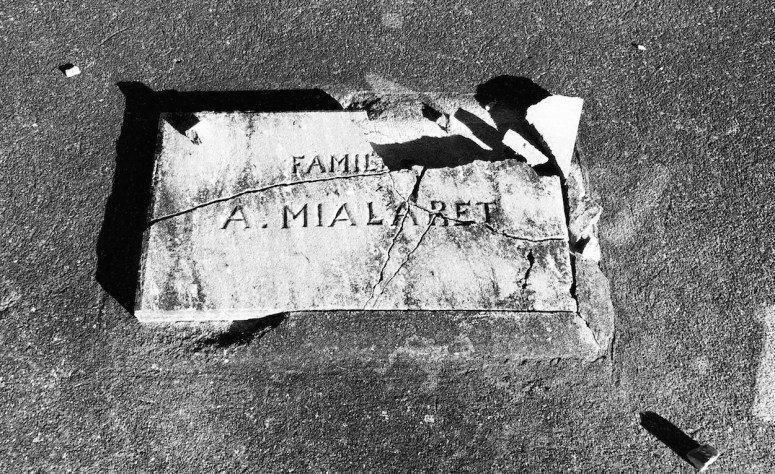
With Halloween right around the corner, I feel like I should post something spooky. Showing a picture of an ancient, decaying headstone bearing the name I used for three-quarters of my life feels pretty spooky. (I went by Anne Mialaret until husband Tim and I married roughly twelve years ago.)

That grave belongs to the immediate family of my great-great-grandfather, Antonin Mialaret, who died in 1884. I found his grave marker, as well as the grave of my great-grandfather, Prosper, when I went upriver to visit the Whitney Plantation. I wrote about the experience last January. Discovering my ancestors’ connection to the owners of that plantation was not spooky, but sobering. And shameful.

Prior to that visit, my knowledge of Antonin Mialaret consisted of a photocopied genealogy that belonged to my father. I specifically remember a line in that photocopy, about Antonin Mialaret possessing a talent for retaining trivial (i.e. useless) knowledge. I have not been able to find anything online to back it up, but I stand by that claim, because I think retention of useless knowledge is hardwired into my genetic makeup.

To wit: ghost pumpkins. It being fall, and close to Halloween, I’ve been thinking about ghost pumpkins. They sound pretty spooky, right? While I like to think they contain the spirits of Halloweens past, they’re really just white pumpkins, whose skin lacks the orange pigment of their more ubiquitous siblings.

Here’s where the useless knowledge comes in: I can’t think of ghost pumpkins without thinking of Pavilions, a supermarket chain in Southern California. In the late ’90s, while I was living in Los Angeles, Pavilions used to run radio ads featuring a raspy-voiced woman. The ad I remember the most was the one promoting their ghost pumpkins. The woman sounded like Sally Kellerman, but there was this quality of sadness to these radio spots that didn’t quite match my image of Sally Kellerman.

And when I say sad, I mean you’d almost want to change the station when these spots came on, so you wouldn’t start blubbering on your way to work. Or the grocery. Or for whatever reason you happened to be in your car.

I can’t tell you exactly what was so sad about the ghost pumpkins at Pavilions. I think it was a combination of the music and the woman’s voice. And the ad copy might have said something about the pumpkins being lonely.

More about the spooky Mialaret capacity for useless knowledge: brother Jerry also lived in Southern California in the late ’90s. We, in fact, would talk about the sad ghost pumpkin commercials back then, in real-time. But it wasn’t until now, twenty years later, that we solved the mystery of the voiceover. From a conversation just a few days ago (because, yes, Mialarets will talk about decades-old radio ads, or Interstate signs seen in Texas forty years ago, or something a neighbor might have said fifty years ago):

Me: I always thought it was Sally Kellerman doing those voiceovers.

Jerry: No. You know who it was? It was the woman who played Harm’s mother on JAG. (Several Mialarets were big fans of JAG).

Me: OK. I’m on it. We’re going to find some YouTube clips for confirmation.

Believe it or not, “Pavilions radio spots from the 1990s” was not a well-used search term. But a bit of digging confirmed that the actress Christina Pickles voiced those radio ads. She did indeed play Harmon Rabb’s mother on JAG, but I knew her as Monica and Ross’s mom on Friends. And I found a YouTube clip of her talking about playing a sorceress in the 1987 “He-Man” movie, where she first met Courteney Cox. I listened with my eyes closed, and a tear came to my eye as I imagined her opining on the loneliness of ghost pumpkins.

Free* Book Offer!

*Free, in exchange for an honest review. Think we’ve all been around long enough to know nothing is ever free 🙂

The Incident Under the Overpass relaunched last month, and I’m eager to know how it’s being received. While I’m thrilled at the five-star review it has on Amazon, reviews are one of those things where quantity is favored over quality (at least by the algorithms that seem to run all things in our digital age).

So I thought I’d reach out to my WordPress friends. If The Incident Under the Overpass sounds like something you might like to read (see synopsis below), I’d be happy to send you a digital review copy. In exchange, I ask that you post your honest review to both Amazon and Goodreads.

If you’re game, just click this link to fill out the Google form: ARC Request

…and I’ll get back to you in short order with a digital copy. Thanks for playing!


When Lacey Becnel awakens under an overpass near her home in New Orleans, she does not yet realize that she’s undergone a profound metamorphosis. Nathan, the dangerously attractive man she discovers at her side, provokes as many questions as answers. As Lacey learns of her emergent abilities, she also finds that nothing will protect her from her growing attraction to Nathan, or his perilous fate.


Greece, Part 2

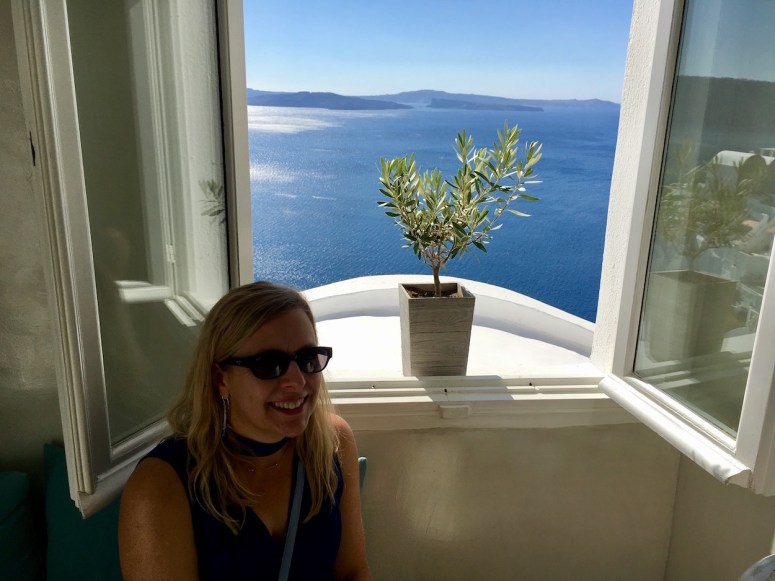
Photo credit: Stacey Batzer

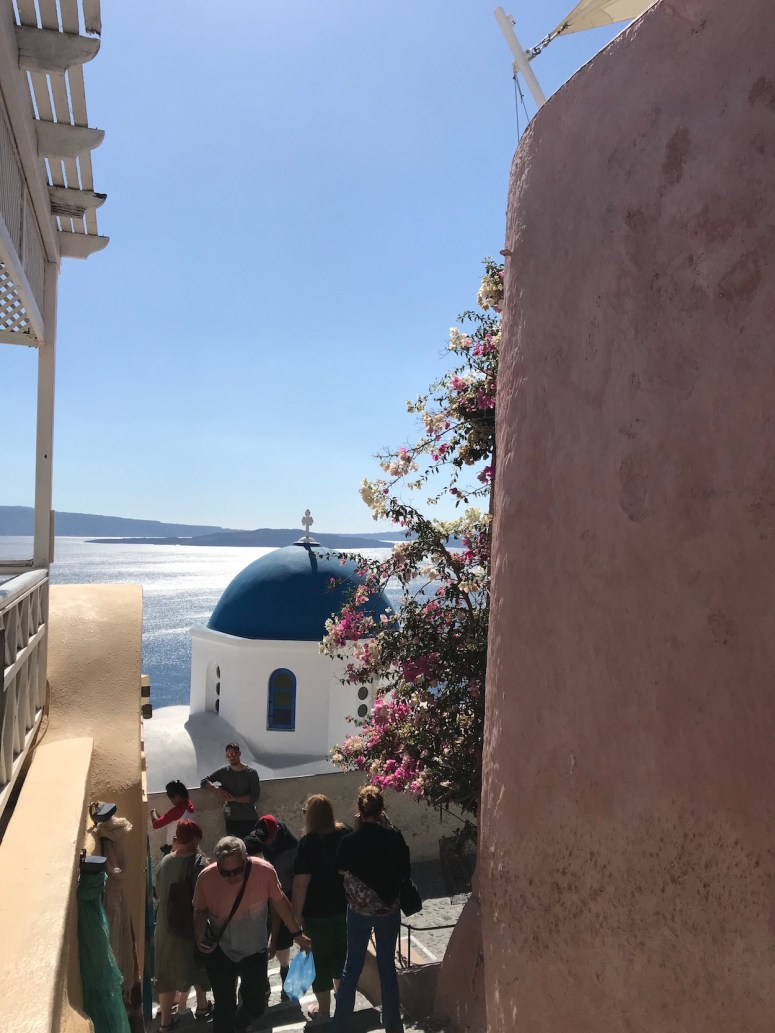
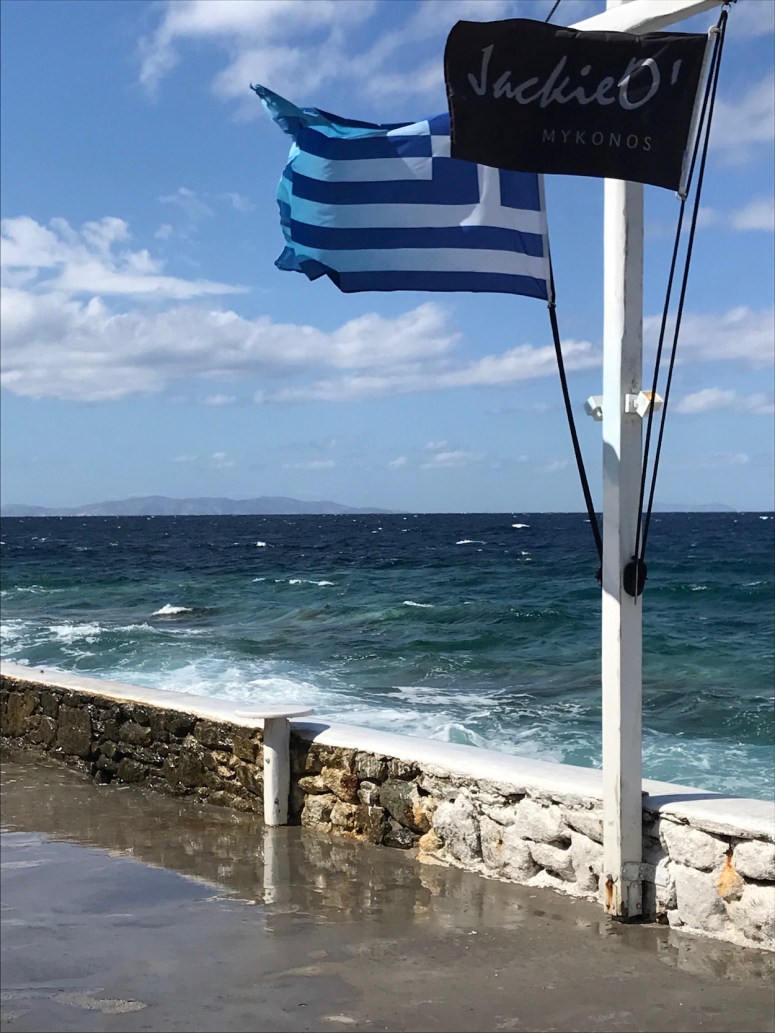
We had just arrived in Santorini when I posted last week. We took a ferry from Mykonos, with quick drop-offs and pick-ups along the way. No chance to set foot on the other islands in the Cyclades.

They’re called the Cyclades because they encircle the ancient, sacred island of Delos, the one I wrote about last week. Wikipedia tells me the islands—with the exception of Santorini and one called Milos—“are peaks of a submerged mountainous terrain.” Milos and Santorini are volcanic islands.

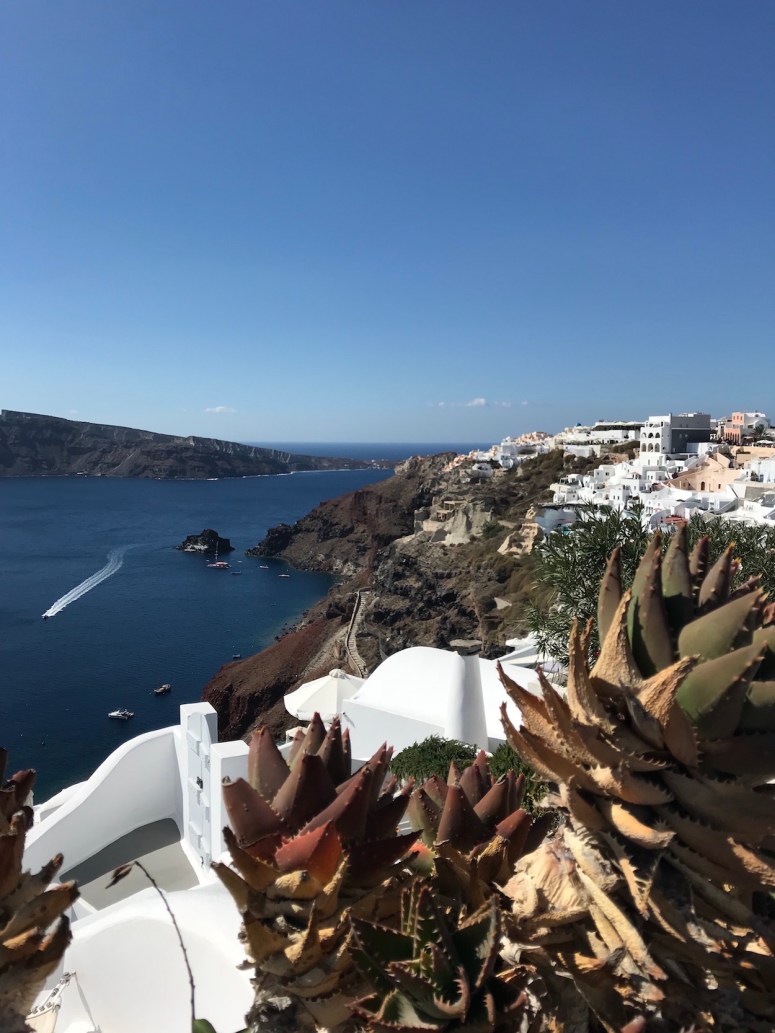
And the volcano part of Santorini is another big thing that captured my imagination. The island itself is pretty big, it was about a forty-five minute drive from where our ferry docked to the town of Oia. The whitewashed roofs of Oia looked like snow-capped peaks from the ferry port. It wasn’t until we got closer that we realized it was a town—and our ultimate destination.

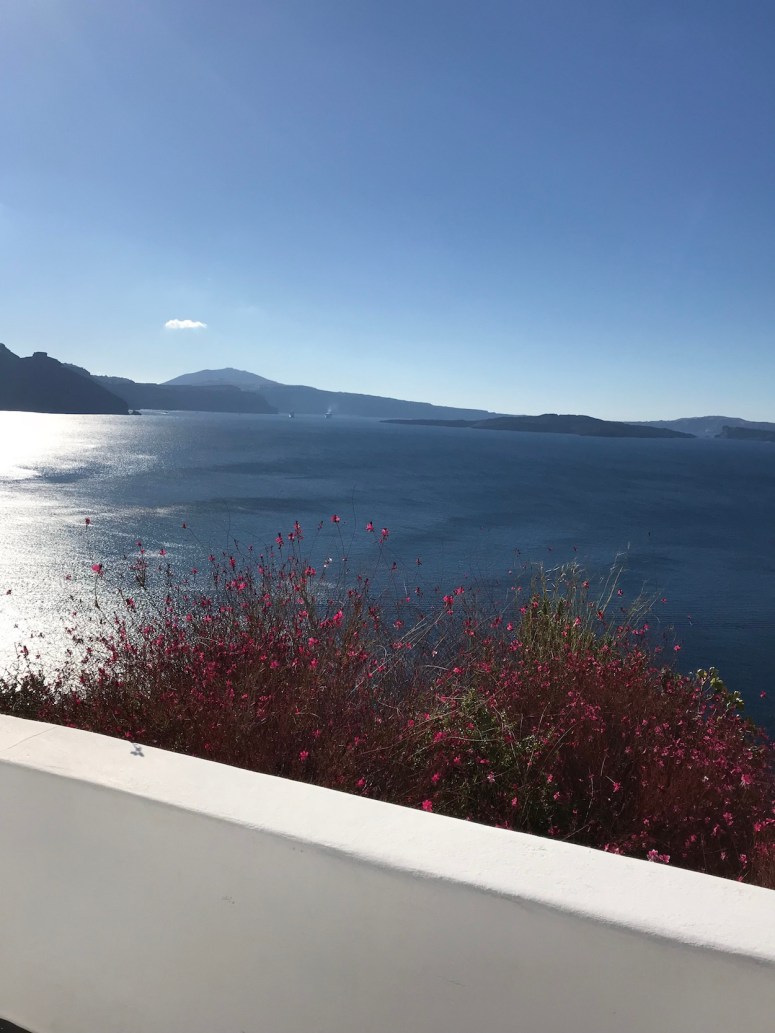
But apparently, the island was much bigger about 3,600 years ago. That’s when it was decimated by a volcanic eruption, which created the caldera central to Santorini. I was super psyched to gaze upon the waters of the caldera for three solid days. I have wanted to see Crater Lake, a caldera lake in Oregon, for as long as I can remember. (Yes, I’m a geology nerd, too). But it’s pretty remote. Even when I was living in Los Angeles, it was definitely too far for a day trip. And I was never able to convince anyone to make a long weekend of it. Though, honestly, I never tried too hard at that.

Luckily, there was a lot more to see in Santorini than just the caldera, and lots more to do. ‘Cause I feel fairly confident in writing that Stacey and Zoe were not as fired up over the caldera (pun intended) as I was.

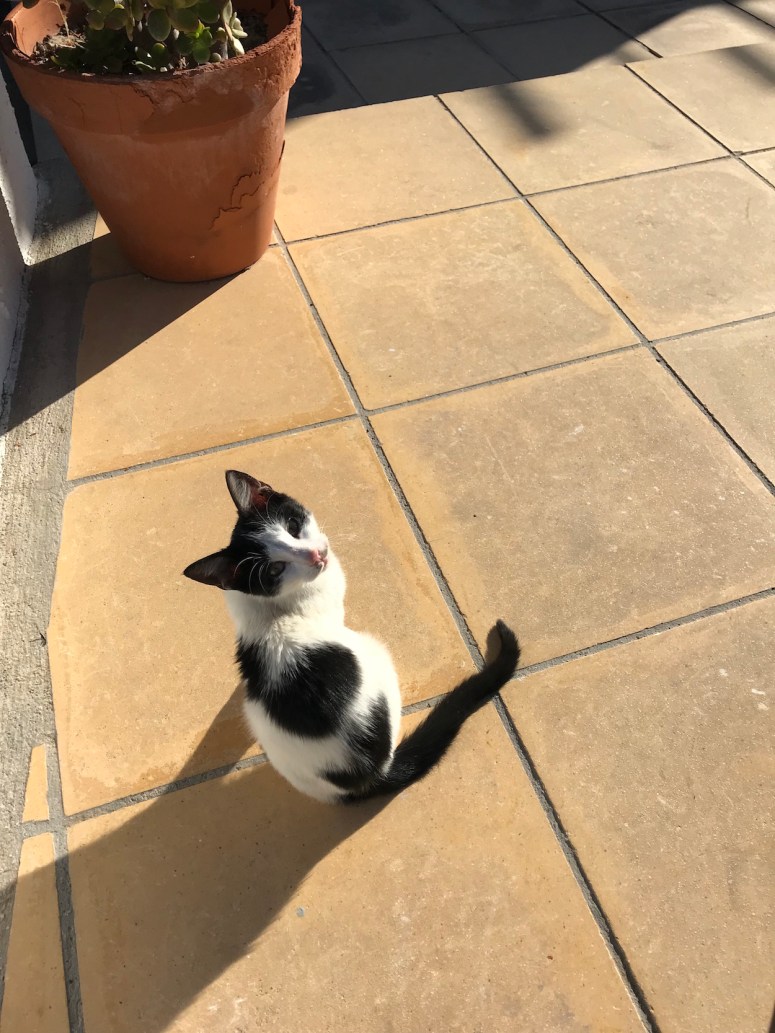
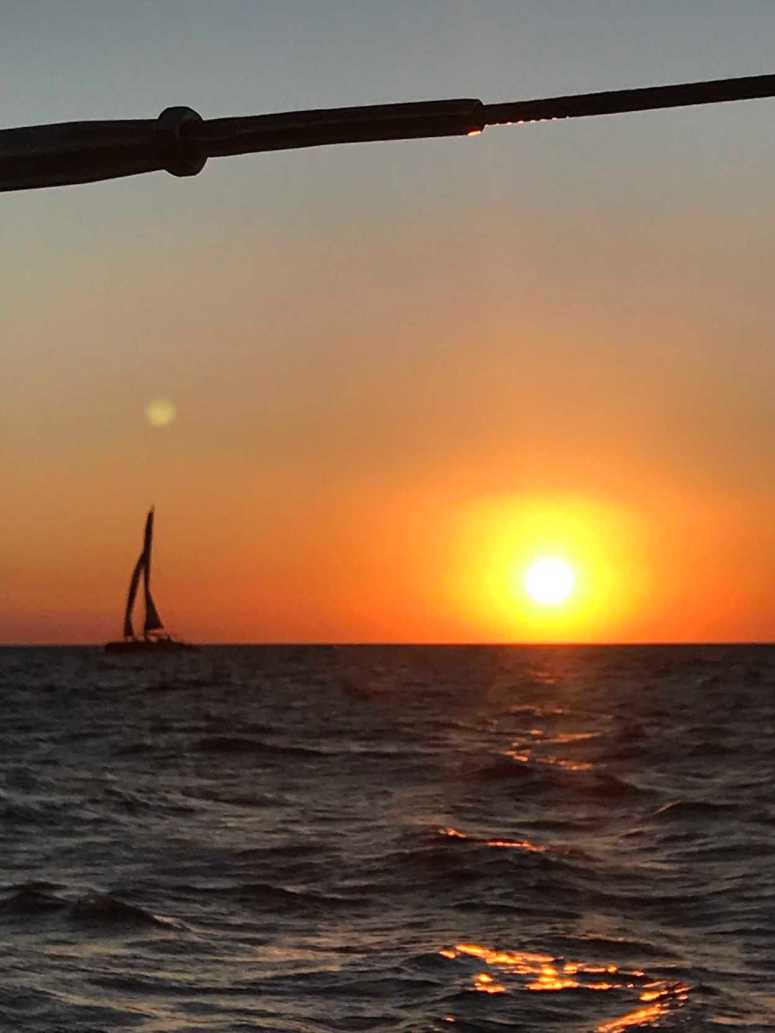
We took a sunset cruise on Stacey’s birthday, which took us all around the caldera and the adjacent waters of the Aegean Sea. I couldn’t pass up the opportunity for a quick swim. But it was indeed quick, because the water was too cool to stay in for too long. We went to a tasting at one of the wineries on Santorini. The wines were fantastic, and they were paired with some incredible dishes. My travel companions have some better shots of our meal at the winery—all I have is a few pictures of the little beggar kittens who kept asking for their own tasting, especially of the seafood dishes.

And the food. Everywhere we went in Greece. I don’t consider myself a foodie, and I don’t think I’ve ever posted about my meals (maybe I’ve mentioned the shepherd’s pie at Kitty O’Sheas in Chicago). But I can say I had some of the tastiest octopus ever in Greece. And I’m also now a big fan of moussaka, having tried it for the first time last week. (Looking at pictures and recipes online, there are definite similarities to shepherd’s pie. Guess I’m consistent.)

So I’m back in NOLA now, and very happy to be home. And also exceedingly grateful to have been able to make that trip, and to have those memories of Ελλάδα (that’s Greece written in Greek). 🙂 🇬🇷

Greece, Part 1

Ancient things. That’s what I’ve been thinking about, these past five days spent in Greece. So many ancient things.

New Orleans will celebrate its Tricentennial in 2018. Three hundred years seems pretty minor, compared to the 3,400 of recorded history within Athens (according to Wikipedia). Mykonos had inhabitants before the 11th century BC. Delos, a now-uninhabited island a short boat ride from Mykonos, was inhabited from the 3rd millennium BC.

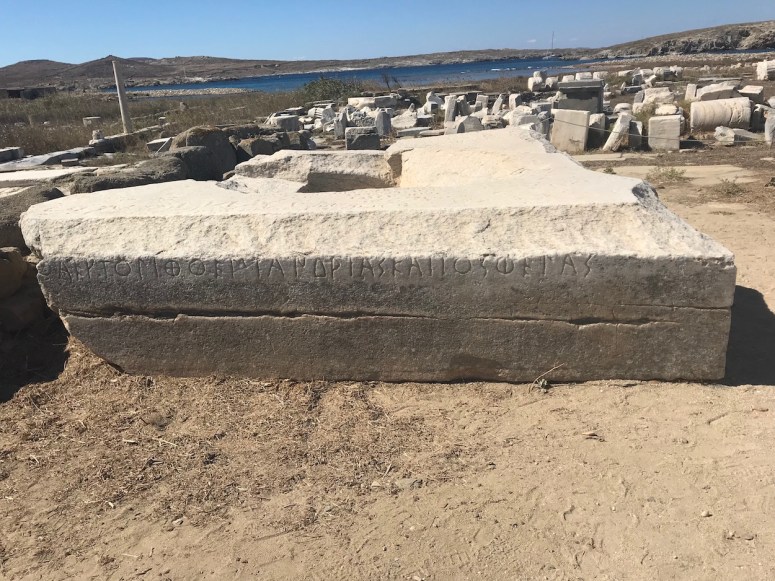
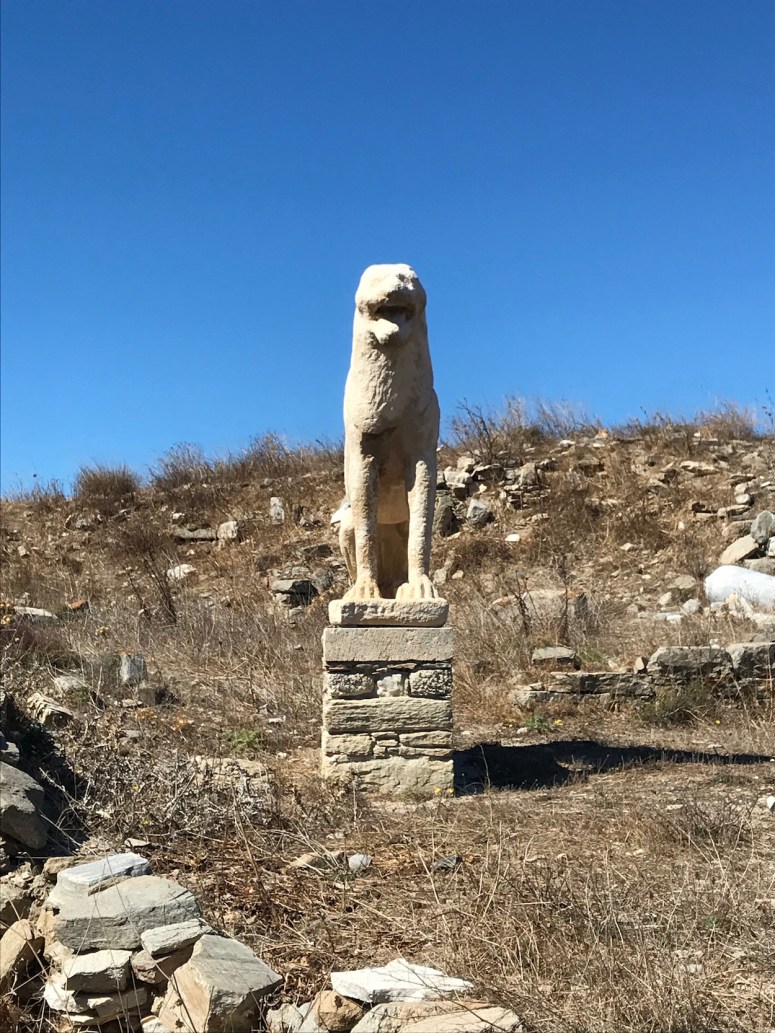
It was fascinating to tour the ruins on Delos. For roughly 1,000 years before the Greeks deemed it the birthplace of Apollo and Artemis, it was a holy sanctuary to the goddess of the earth (according to Maria, our tour guide on Delos).

Certainly, much has changed in the intervening millennia. And much of it in just the past 100 years or so. But I’ve been thinking of all the things about human life that haven’t changed. Our needs, especially. Eating. Drinking, both wine and water. Shelter. Employment, to occupy our days and provide means to the eating and drinking and shelter. Entertainment. Companionship. Worship.

The details have changed, and access to all these things has become much easier for a great many of earth’s inhabitants. But really, it seems not much has changed about the needs themselves. Being a human in the 21st century, who would like to make entertainment her employment, I’ve been intrigued by the story possibilities of all these ancient things.

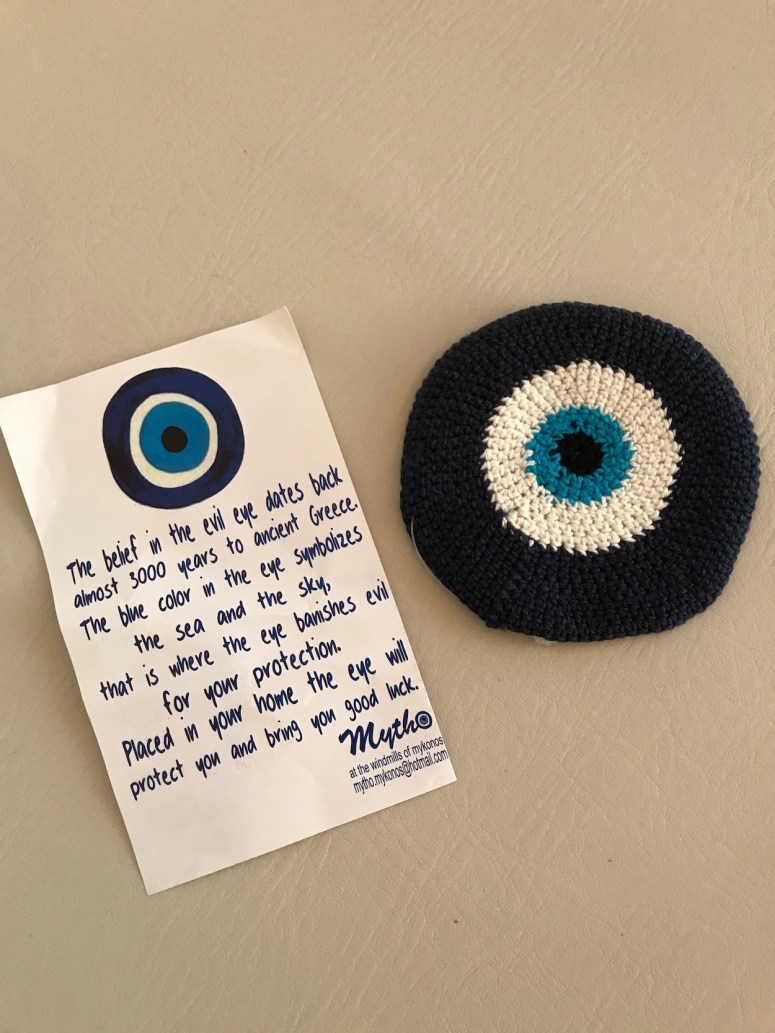
Like, why does “an ancient evil” sound so much more menacing than just plain old “evil?” I’ve been drawn to all the manifestations of the eye symbol I’ve seen while in Greece. On doorways, gates, on fighter planes I saw on the way to our hotel in Mykonos from the airport. A card I picked up from a gift shop tells me this: that use of the symbol dates back almost 3,000 years, and is supposed to ward off evil and bring the bearer good luck. So, apparently, it’s not just me—people have been worried about the bad gris-gris for a really long time.

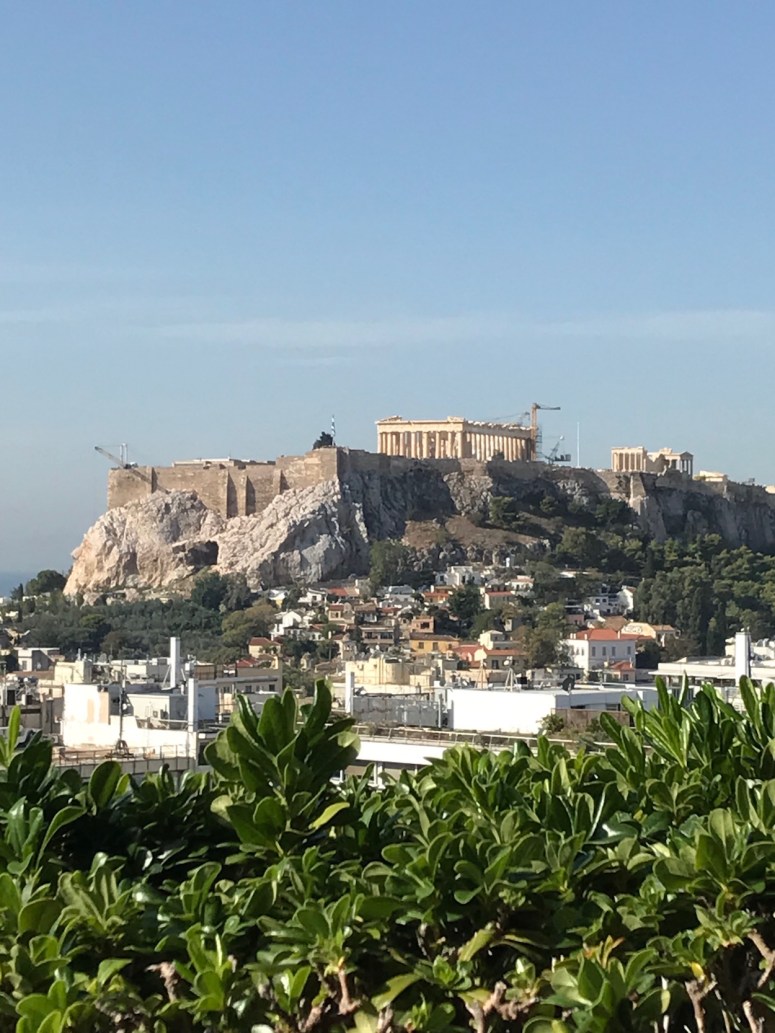
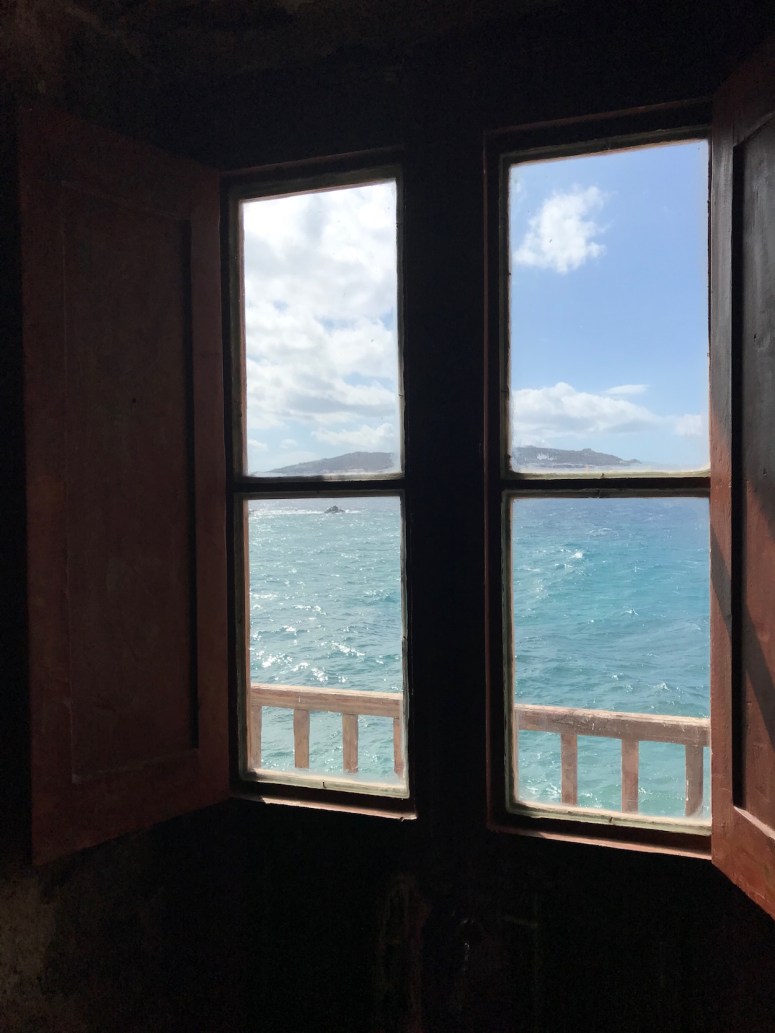
Since pictures are worth (at least) 1,000 words, I never intended to get too long-winded with this post. So here are some photos from my time in Greece thus far:

Athens
Mykonos Harbor
Shop window in Mykonos


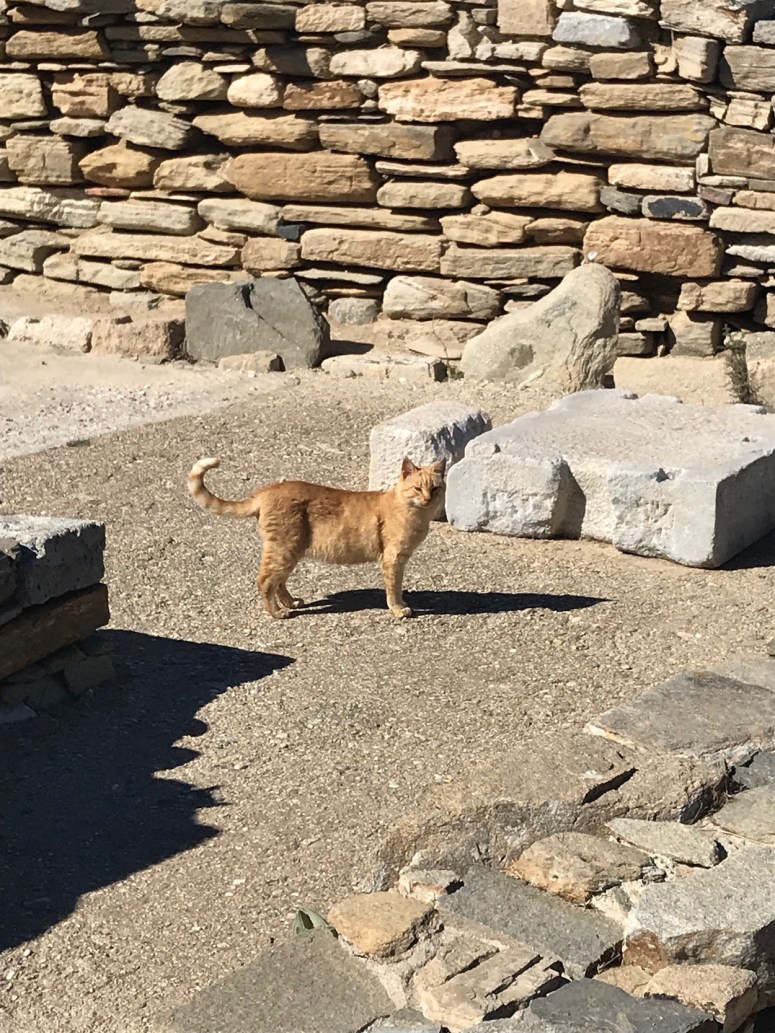
These four pictures are all from Delos
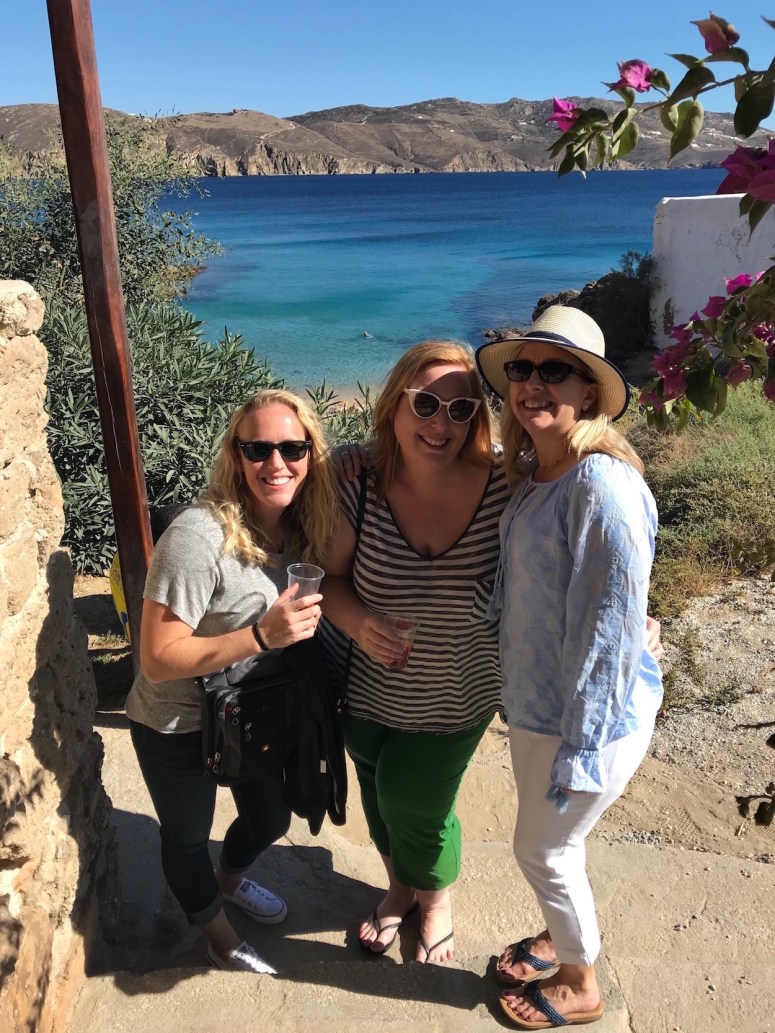
At Kiki’s Tavern on Mykonos
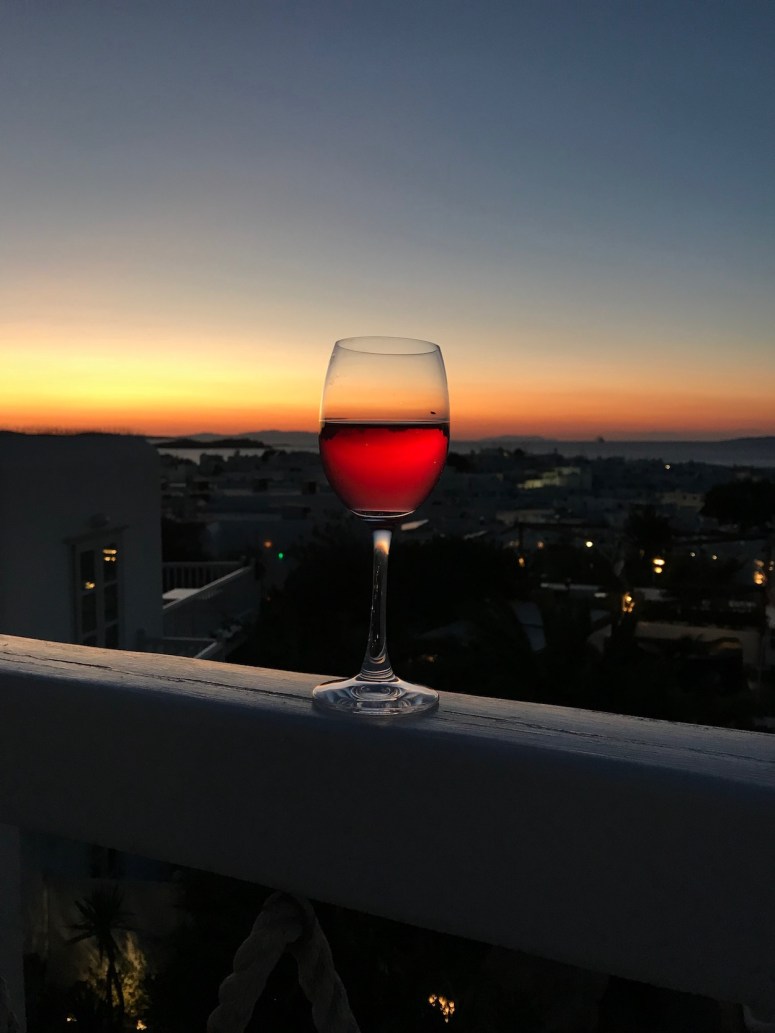
Last sunset in Mykonos

It’s All Greek to Me

I leave for Greece tomorrow. In the past twenty years, I’ve traveled to Europe many times. In the first five or so years of that twenty-year span, I would head across the Atlantic at least twice annually. But the frequency doesn’t diminish the impact. It’s always a big deal to me.

All of these trips, with one notable exception, have been for my job. I might have tacked on some personal travel (at my own expense, natch); but for the bulk of the travel, work was the main reason behind it.

Tomorrow’s trip is pure vacation. The only other time I’ve flown to Europe with no agenda other than sightseeing was in 2002. It was a couple of years after my Dad had died, and my Mom and I went to the U.K. We drove all around Great Britain, and covered a good bit of England (with a couple of forays into Wales and Scotland). I’ll sum it up with this: I’ve been fortunate to have several “trips of a lifetime” in my lifetime thus far, and that trip with Mom was definitely one of them. She’s been gone nearly three years now, and the memories of that U.K. trip only grow sweeter with time.

Greece will be with one of my best friends, Stacey, and her cousin, Zoe. I’m super excited for many reasons—one of the chief reasons being getting to spend time together. Stacey and I became friends when we worked for the E! Networks in Los Angeles. We each left our jobs there many years ago, and I also left Los Angeles many years ago. So I only get to see Stacey during visits. Once a year, if I’m lucky.

Back in the early days of our friendship, Stacey would refer to me as “International Anne.” (I worked in the international sales/marketing department. Thus, all the trips to Europe.) I think these days, Stacey’s international travel has far surpassed mine. Be that as it may, it will be the first visit to Greece for all of us. For the past several months, I’ve paid extra special attention to anything remotely Grecian that’s crossed my path. Here, in no particular order, are a few observations:

  • Star Trek: The Next Generation, Outside In Makes It So: I’ve mentioned this Star Trek: TNG anthology several times, because I have an essay in there (trying to do a better job at self-promotion). The title of that essay? “Time’s Arrow: I Might Be .004% Out of Phase with Plato”. Yes, famed Greek philosopher Plato factors pretty heavily in the piece (but it’s really accessible and easy to read, I promise!) I wrote it long before I knew I’d be traveling to Plato’s old stomping grounds.
  • Greek myths, titans, and gods: I haven’t specifically researched Greek mythology, but any deeper look into the origin of any story always seems to lead to something Greek. I’m working on a sci-fi short story, and in the course of researching some names, I’ve encountered these morsels:
    • Deucalion: He was the son of Prometheus, and, according to Wikipedia, “is closely connected with the Flood myth.” Like a Greek version of Noah.
    • Chiron: Sired by the Titan Cronus, he was an “intelligent, civilized and kind” centaur. He was also immortal. He suffered from a wound that would not heal, so he wasn’t that keen on living forever, so he traded his immortality for the life of Prometheus.
    • Prometheus: Kinda funny how he keeps popping up. Even though Zeus was really, really, pissed at him for stealing fire and giving it to humankind.
  • And to conclude with something completely different: I recently purchased the blouse featured at the top of this post. The blue trimming and the loose fit struck me as appropriate for Greece (and hopefully pretty comfortable for the flight over). But once I got it home, in a fit of buyer’s remorse, perhaps, it also struck me as something Pagliacci wouldn’t be afraid to wear. I’ve had “The Tears of a Clown” in my head ever since.
Quarter Report 2017: Star Trek TNG, Quanta, a New Year, and More

Chicago: I rode the L!

Annnnnnd, we’re back to The Fast and the Furious. I’ve written in these pages at least twice about the character Dom Toretto and his special brand of wisdom. When I first heard Vin Diesel utter the line “I live my life a quarter mile at a time,” I knew I had encountered a bit of cinematic brilliance. Something on the order of Patrick Swayze’s (as Johnny Castle) “Nobody puts Baby in a corner.” Or my own personal muse, John McClane’s “Yippee ki yay, *Mr. Falcon*” (as it appears in the censored version of Die Hard 2.)

Much like Dominic Toretto, I tend to think, and plan, in terms of quarters (yearly quarters, not miles). Discrete, three-month-sized chunks. As I reflect on the third quarter of 2017, I find it’s been pretty eventful. Some of the stuff I’ve written about (the eclipse, our visit to New Smyrna Beach, hurricanes, the release of my novel), but there’s plenty of other stuff I haven’t. Here, in no particular order, are some observations, tidbits, and events that have been swimming about in my particular cosmos in Q3:

  • Star Trek: The Next Generation, Outside In Makes It So releases today! This collection of essays covers every episode of Star Trek: TNG, plus the movies. It’s commemorating the 30th anniversary of the show’s premiere. I’m thrilled that my piece about the episode “Time’s Arrow” is included. You can find the anthology on sale here.
  • More about discrete chunks: While on a recent Internet search into famed physicist Max Planck, I discovered what he is most known for, and it’s this: quanta. Quanta, the root of the term “quantum.” As in quantum physics, quantum theory, Quantum Leap. Planck is credited with the hypothesis that the very nature of nature itself is not continuous, that change occurs in discrete increments. Regarding electromagnetic waves, he termed these discrete packets of energy “quanta.” This discovery earned him the Nobel Prize nearly 100 years ago. All these years of being fascinated and confused by quantum physics, and I’d never thought about the meaning of “quantum” before. And I’m sure some of you who have read this far are hoping you never have to think about the word again.
  • U2: I saw U2 in concert for the first time ever a few weeks ago. They are on tour, promoting the 30th anniversary of “The Joshua Tree” album. (Discrete chunks of thirty years seem to be a theme, here. I also attended my thirty year high school reunion this past quarter). Anyway, U2: during my heavy concert-going years (when I was between fifteen and twenty-five, roughly), I would have definitely bought tickets to see U2, if they had come to my town. (In those years, it was New Orleans and Tucson, Arizona). But they never did. I was glad the band opened the set with really old stuff, songs from “War.” The songs I would have wanted to hear, if our paths had crossed so many years ago. All in all, very worthwhile—plus, Beck opened for them, and he was fantastic.
  • Rosh Hashanah: I’m a little hesitant to write this, since I’m not Jewish, but I really don’t see this as cultural appropriation. I’m Catholic, which is a Judeo-Christian religion, and I’ve always been a bit ecumenical in my practice, anyway. So, Rosh Hashanah—about fifteen years ago, after a particularly rough twelve months (four quarters), I decided to start my new year’s resolutions at Rosh Hashanah. To give them a sort of beta test-run before January. With all this “30-year” backwards staring, I’m grateful that the arrival of Rosh Hashanah last week has me looking forward once again.
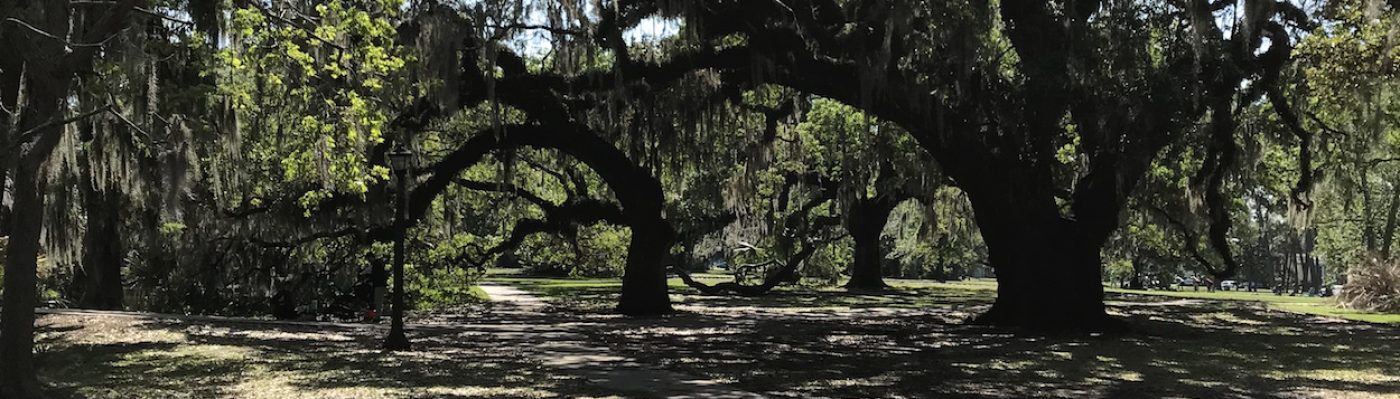
  • Chicago: And, oh yeah, I spent four days in Chicago last week with my job. It was a good time to be there, if a bit unseasonably warm. The pictures in this post are from that trip.

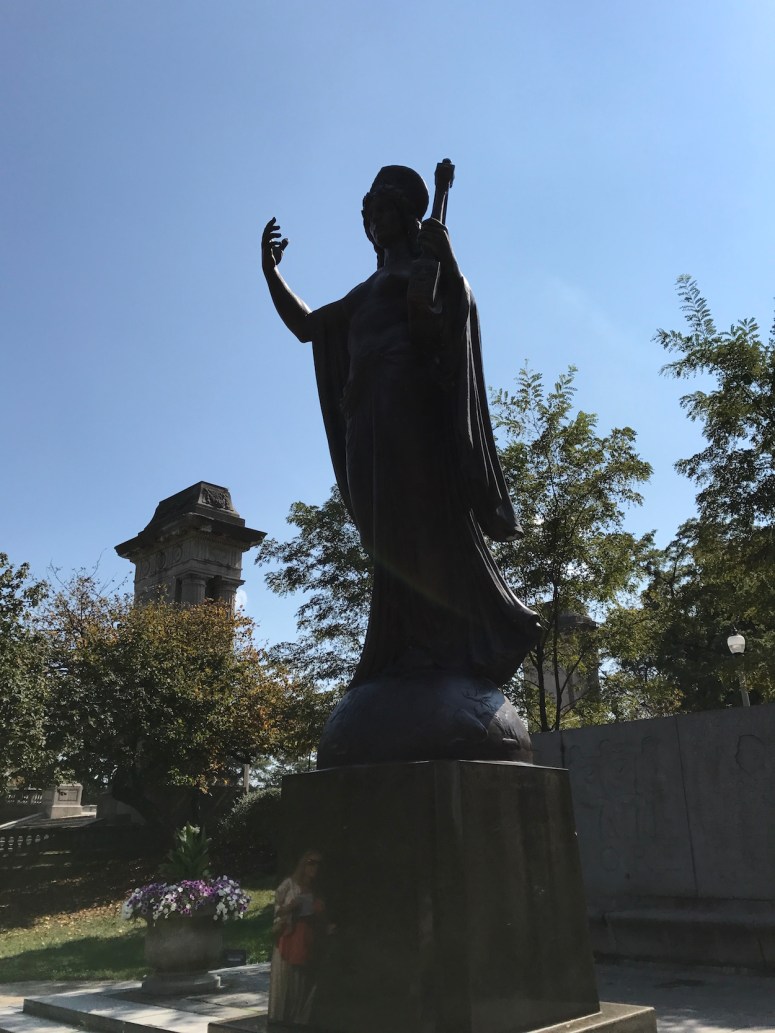
Spirit of Music statue, Grant Park
View of Lake Michigan and Adler Planetarium (I think) from Grant Park


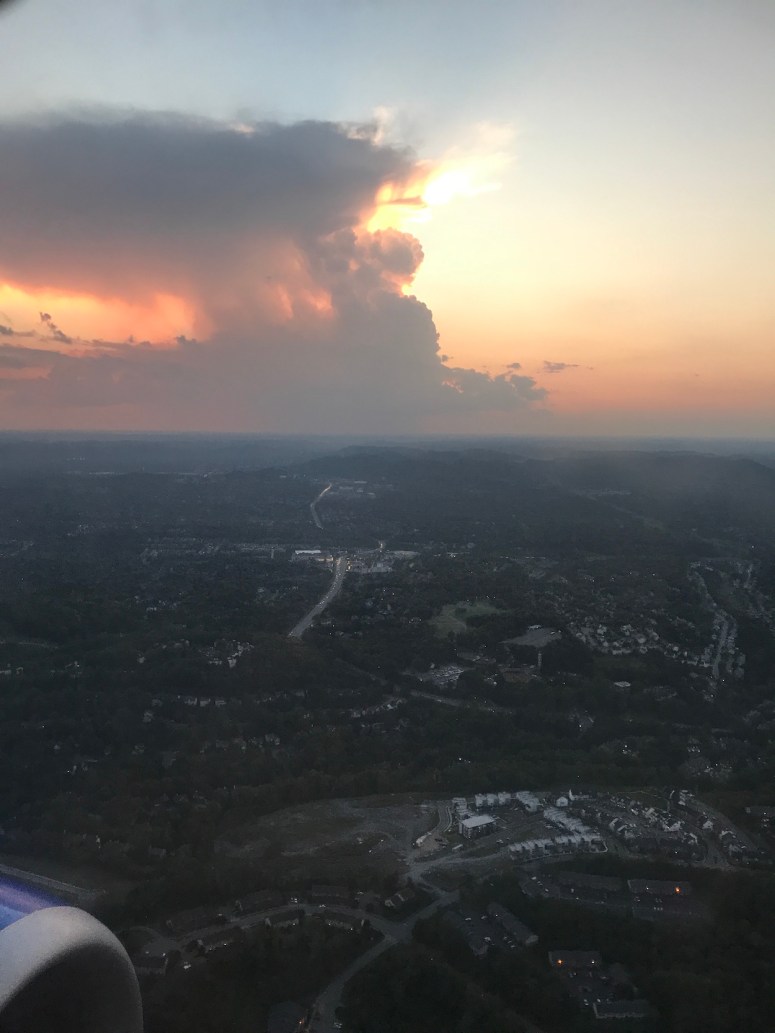
Going home, connecting in Nashville

On Sale Now!

*Special Tuesday edition!

The Incident Under the Overpass is now available on Amazon! In an attempt at courageous self-promotion, I’ll share some endorsements from early reviews:

“Read It If: you like your supernatural romances set in New Orleans. A delight.” –CravenWild.com

“McClane’s debut novel, set in sultry New Orleans, combines mystery, romance, and a touch of the paranormal…Lacey is an engaging heroine…” -Kirkus Reviews

“Lacey has a wry, self-deprecating narrative voice, enlivened by frequent pop-culture references.” -Kirkus Reviews

“It’s a unique story with great characters and it stands out from many other books in this genre.” –By Hook or By Book
“The backdrop feels familiar enough, but as the pages turn Anne McClane peels away the layers to reveal a tale of intrigue laced with old Louisiana spirit ways.” -Ian McNulty, author of A Season of Night and Louisiana Rambles

And here’s a quick synopsis: When Lacey Becnel awakens under an overpass near her home in New Orleans, she does not yet realize that she’s undergone a profound metamorphosis. Nathan, the dangerously attractive man she discovers at her side, provokes as many questions as answers. As Lacey learns of her emergent abilities, she also finds that nothing will protect her from her growing attraction to Nathan, or his perilous fate.

So here’s the thing about self-promotion–I’ve written in earlier posts (one referenced at the top of this page) how it does not come easily to me. It’s one of the reasons I made sure the review excerpts above are all from people I don’t know personally. Their opinion of the book is not muddied by their opinion of me.

It’s also one of the reasons it’s been so delightful to let After Glows handle the publishing. While I still have a responsibility for promoting my work, it’s no longer all on me.

I’ll conclude with this plug: if The Incident Under the Overpass sounds like a story you might enjoy, I hope you’ll check it out. And if you do, I sure hope the “might enjoy” turns into a “definitely enjoyed.”

*Next week, I’ll return to my regularly-scheduled Wednesday programming. 🙂