Writing and Taxes

Photo credit: http://www.indiana.edu

In this world, nothing is certain but death and taxes.

I looked up the source of this quote in the process of writing this post. Certain aspects of its context are pretty interesting. Certain things I’d forgotten, or might have not even known in the first place, like:

  • It’s commonly attributed to Benjamin Franklin, from a letter he wrote to Jean-Baptiste Leroy in 1789
  • The phrase actually appeared at least twice before, earlier in the 18th century, in Daniel Defoe’s The Political History of the Devil (1726) and in The Cobbler of Preston by Christopher Bullock (1716)
  • Ben Franklin’s quote is in reference to the newly-minted U.S. Constitution

That last bit is particularly interesting, considering that tax issues were one of the chief reasons we wound up creating a constitution of our own in the first place. Here’s the full quote, as I found it on Google:

“Our new Constitution is now established, and has an appearance that promises permanency; but in this world nothing can be said to be certain, except death and taxes.”

And as an aside, I’m afraid to look up The Political History of the Devil, because I’m thinking it might be the thickest book in history.

Anyway, as much as I’d like to say I spent the better part of this past weekend writing, I can’t, because I was finishing up our 2017 U.S. income tax return (and the corresponding Louisiana state return). I have filed my own tax returns for as long as I can remember, for as long as I’ve had to file taxes, really. Back when a 1040EZ did the trick, and loooong before TurboTax or any similar tax software existed.

I feel compelled to write about taxes because, just as they are as certain as death, they place me in a certain firmament as a WRITER. This is my third year claiming “writing” as a sideline business on my return. While I know that this is more than a hobby, proclaiming it as a business with the U.S. government REALLY puts it on record.

But I don’t go through this rather laborious exercise purely out of an effort to “force” my legitimacy as a writer. That would definitely not be worth the effort. It really goes more toward intent. I intend to, one day, make some kind of living as a fiction writer. And I intend to, one day, make enough that I would have to pay taxes on the proceeds.

I’m not at that point yet.

Fiction writing has been a loss leader for these past three years I’ve claimed it on my return. And I fully expect it will continue that way for at least a few more years. It’s one of those things I remember from getting my Minor (in Marketing) from Arizona’s school of business. To expect a new business to operate at a loss for at least five years. At least, I hope I’m remembering that correctly.

I’m more than halfway through that five-year period, and I’m starting to get a little nervous. What if it takes more than five years to show some decent proceeds? Who keeps track of these things? Will the IRS send me a letter, telling me to “get on the stick” and get after this writing thing? (Although it’s more likely they’ll send me a letter with something like a-u-d-i-t in there somewhere).

I know I can’t be the only person to face this quandary. Writing as a profession—and taxes—have been around a very long time. So the bigger question is: what did Ben Franklin do? Or Daniel Defoe or Christopher Bullock, for that matter? And the biggest question of all: how the heck did they do it without TurboTax?
Unexpected Stories

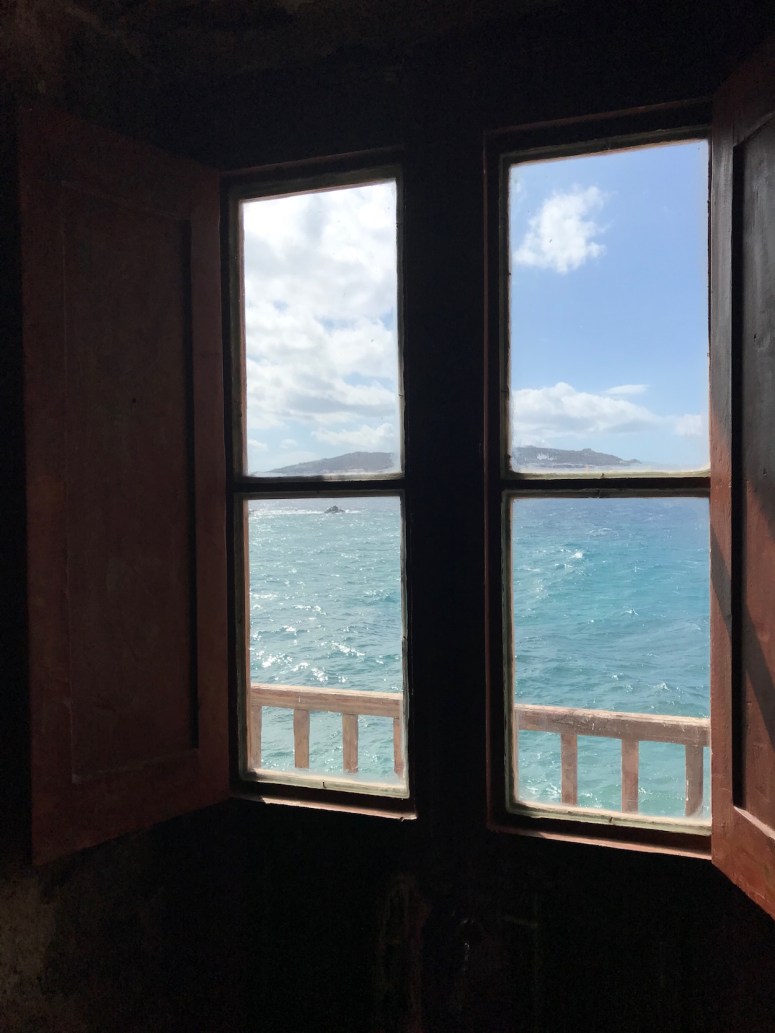
An unexpected view from a shop window in Mykonos

So, I’ll be making some changes to this website over the coming months. . .nothing major, essentially, just getting it ready for the launch of my second novel by late summer/early fall. Well, I don’t think it will look like anything major to visitors, but it’s minorly major to me. I’m trying to put some thought into the changes, improve the site’s searchability, and give the folks who’ve never heard of me (so, read: most folks, everywhere) some idea of what I’m about.

This website will turn three years old this summer. It’s no longer a start-up. And marketing habits die hard. While my day job is no longer in the day-to-day business of marketing, it’s still heavy in the communications arena. And I feel like some of the communicative elements here are getting stale.

What I’m getting at is, in marketing parlance, I’m saying it’s high time for this website to undergo a “branding refresh.”

For all things branding, once again, I turned to Sally Hogshead, creator of the “Fascination Advantage.” This is a personality assessment that’s supposed to help you figure out how everyone sees you (or your “brand”) when you’re at your best. I signed up for her “One Hour Personal Brand” workshop. (The fee was very reasonable. I’ve certainly spent a lot stupider money on less productive exercises trying to help me figure out what the world thinks of me.)

So far, the workshop is telling me I need to come up with an “anthem.” Her definition of anthem is “a tagline to describe myself,” or “my personal brand.” You can see the tagline I’ve been using these past three years, right at the top of this page. “Fiction writer. Yippee ki yay.”

I’m not so sure I’m ready to lose the “Yippee ki yay” part. Jury’s still out on that, even though the people who performed the search optimization audit on the site (a different company, in no way affiliated with Sally Hogshead) said something about how “it doesn’t add anything to search.” I wanted to respond back “oh yeah, but it says a lot  about me, mutha somethin,” but I didn’t. ‘Cause, yeah, as an aside, I paid this company more than twice what I paid for the One Hour Personal Brand, and it was like pulling teeth to get them to deliver the audit. About two months later than they promised.

Anyway, I’m very ready to refine the “Fiction writer” part. I’d like to replace it with “Unexpected stories.” I could make that my anthem: “I write unexpected stories.” But there’s something holding me back from using that phrase, which I’ll get to in a bit.

This is how I came up with “Unexpected stories:” the One Hour Personal Brand workshop told me to come up with an adjective from my Fascination profile, and pair it with a noun. The noun I’d really like to use is “stories.” Stories feels like the most appropriate word tying my long and short form works together. (Another aside, I have a short story that should publish later this month, in the sci-fi anthology Just A Minor Malfunction #4.)

Here’s why I like “unexpected” best: not only does it seem like a good descriptor for the paranormal and sci-fi themes in what I write, it also feels right for my fiction writing career. I think I always expected I would be doing this some day. . .but the rest of the folks in my world? Not so much.

But finally, here’s why I’m reluctant to forge ahead with a brand new “unexpected stories” tagline: it’s also the title of a collection of Octavia Butler’s short stories, published posthumously just a few years ago. Would using it usurp any of the rightful praise due this Hugo- and Nebula-award-winning author? The first speculative fiction writer to win a MacArthur “genius grant?” Or would using it honor her?

Jury’s still out on that question, too.

You asked for miracles, Theo?

I give you the F.B.I. — Hans Gruber from Die Hard

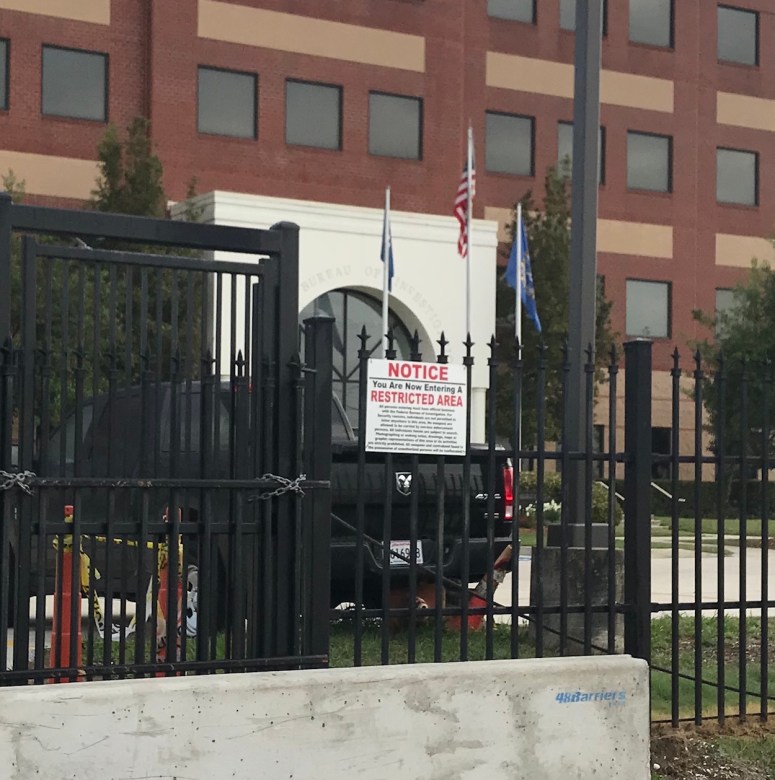
Jersey barrier, chain link, sign…we get the idea

On Monday, I had the amazing opportunity to attend presentations at the FBI field office in New Orleans. Many thanks to the New Orleans chapter of Sisters in Crime for arranging this outing for its members. Sisters in Crime is a national organization offering networking, advice and support to mystery authors. (While I wouldn’t qualify myself as a “mystery author,” I certainly seek to incorporate elements of mystery into my stories. My membership in this group has proven very worthwhile).

Having never been in any real trouble with the law, my impression of the FBI is mostly formed from movies. So, of course I’ve had Hans Gruber’s aforementioned quote from Die Hard going through my head as I attempt to write this piece. And then there’s also Agent Kay from Men in Black, when he’s posing as an FBI agent: “We at the FBI do not have a sense of humor we’re aware of.”

Entering the FBI field office was certainly serious business. We had to pass a limited background check in order to access the facility. And as the picture above shows, you can’t just waltz through the front door once you’ve been approved. We had to sign in at a guard gate, and then we were escorted by private security to the front door, where “Federal Bureau of Investigation” appears etched in invisible ink around the arch. You can barely make it out in the picture—which is, by the way, the only one I have, because we were not allowed to bring cell phones or any electronics into the field office.

Once inside, we were escorted by the community liaison to the “Old Case Files” room, where we were greeted by the Special Agent in Charge, Eric Rommal. He explained a little bit of how the FBI is organized around the country. The largest offices are in New York and Washington, D.C.; but they each cover a relatively small geographic area. New York covers the five boroughs, and Washington the D.C. metro area. By comparison, the New Orleans office covers the entire state of Louisiana.

After the SAC’s introduction, the newly-appointed Supervisory Special Agent (SSA) from the local Cyber division presented a case study on the investigation into some criminals, who stole about $100,000 by hacking into and assuming someone’s personal email address.

Later, when it was time for a bathroom break, I got a glimpse into why there was so much pre-screening before the FBI just let anyone into their facility. We had to be escorted to the toilets, too—right past an open door with “Gun Vault” marked alongside the door frame. I could see a line of rifles—I think they were rifles, I’m no gun expert—secured against the wall inside.

Our final presentation in the “Old Case Files” room was from the SSA of New Orleans’s Counterintelligence division. He played a lead role in the investigation of Tai Shen Kuo, a New Orleans resident who was convicted of spying for China. The case has been declassified, so SSA Bob Thibault was able to present a fascinating, first-hand account of all the cool, espionage-y details. My imagination was definitely sparked.

Finally, before we left, we received a quick demonstration of FATS, a firearms training simulator. It was a sobering look into the use of deadly force, and how every single time it boils down to a judgement call on the part of law enforcement.

It was pretty phenomenal to get a look inside an institution as public, in-the-glaring-spotlight/news-every-day-kinda-public, as the FBI. They’ve been at this for over a century! In the few hours I spent in the New Orleans office, I got a sense of earnest people, just trying to do their jobs, protecting honest folks from bad actors. Sorry, Hans, that may not be miraculous, but I’m grateful people remain willing to do the job, just the same.

Does every picture tell a story?

There’s more to this thistle than meets the eye…

On a run through New Orleans City Park this past Saturday, something caught my eye. My runs these days are a sorta walk-run combo, so I’m not opposed to breaking my stride to satisfy my curiosity. I’m at a point in my life where finding the unexpected is more important to me than reaching some particular cardiovascular fitness milestone.

I was pleased to find a few thistles blooming, right at the shoreline of the lagoon. When you think of New Orleans flora, “thistle” is not one of the first plants to come to mind. Not for me, at least. So these prickly, lilac-colored-bloom beauties were a pleasant surprise.

They were in a fairly secluded area of City Park, set back about fifty yards from the nearest roadway, but only a few feet off the paved walking path. I don’t like to run with my phone, so I made an intention to return the next day for a more leisurely picture-taking expedition.

That’s where the story comes in.

I was out and about early on Sunday morning, so I cheated and drove to the thistle spot. Or rather, I parked near there as I made my way back home. Traipsing the fifty yards across the grass and fallen oak leaves, I could see someone was already there ahead of me. I first thought it was a photographer, setting up to get their own thistle pic. (Photographers are definitely not a rare sight in City Park.)

As I approached, I could see it was a man closing up a backpack. It looked like a nice, solid backpack, not something cobbled together. And he seemed pretty intent on his task—striking camp, I assumed—and not so interested in the nearby runners and / or amateurish iPhone photographers.

But still, I had to do one of those instant threat/need assessments. You know, all the questions and answers that run through your head in a split second. “Does this person look dangerous?” Maybe, but he’s behind and bent over his pack, so it’s not like he’s lying in wait. “Does this person look like they need help?” He does not look like he needs or wants help. “Is this person supposed to be camping here?” Probably not, but I’m not about to call him out on it.

So in that instant, I decided to proceed with a few quick thistle pictures, but not dally doing it. I told him “Good morning” as I approached the lagoon’s edge. He looked up, but didn’t respond. (That’s when I got the idea that he neither needed or wanted any kind of attention). I took the photos, and then hightailed it out of there.

Being a fiction writer, I’ve had nothing but possibilities running through my head ever since. Daylight savings time had begun just about seven hours earlier, so did backpack man think he was striking his camp earlier than he actually was? Was he wondering why so many runners, walkers, and just general people were out so blooming early?

And then, don’t get me started on the thistles. Are they a sign for off-the-grid backpackers, “Here You May Camp”? Kind of like the scarlet pimpernel? Or does some scout come and seed them for off-the-grid backpackers? Is there a Secret Society of the Thistle?

Reality still creeps in. I don’t want it to seem like I am making light of this person’s circumstances. I get the gravitas. Outdoor living is tough, and especially so if it’s not by choice. My sense was his was mostly by choice. But my sense has been wrong before.

Which brings me to one of those things I’ve learned about writing, my writing, in the eight or so years I’ve been at it. And here it is: ideas for fiction—even the zaniest ideas, especially the zaniest ideas—are rarely worth pursuing if they aren’t backed up somehow by the weight and gravity of the real world.


The Writing Spectrum

Last weekend was jam-packed with writerly endeavors. I spent all day Saturday down in Houma, Louisiana, at the Jambalaya Writers’ Conference. But Friday and Sunday each had significant entries, too. So herewith, in chronological order, the highlights:

Friday at Community Book Center: I had the pleasure of meeting Jan Miles of Brown Bird Books. She presented The Post-Racial Negro Green Book, which documents acts of racial bias against African Americans in the U.S., from 2013 to 2016. She read from a list of incidents—some from the recent years captured in the book, and some from the Civil Rights era—and had the audience guess the century they occurred. We got many wrong; it was an amazingly eye-opening exercise. She compiled this archive “for the sake of review, consideration, discussion, and action.” I would love to do my part to help spread the word.

Saturday at the Terrebonne Parish Main Library: This library hosted the 15th Annual Jambalaya Writers’ Conference. Houma is about an hour’s drive southwest of New Orleans, and this was my first time attending this event. I was so impressed by all the new voices I encountered; here are a few who stood out:

  • I started the day with a presentation by Chanelle Benz, author of a story collection titled The Man Who Shot Out My Eye Is Dead. These stories feature a wide range of characters from different centuries, so she was the perfect person to present the topic: “Write What You Don’t Know: Finding Diverse Characters.”
  • Maurice Carlos Ruffin, a New Orleans-based writer, moderated a panel on setting (called “Where to Hide the Bodies.”) He did an admirable job of making sure all the authors on the panel had equal time. (I recall him saying he’s a lawyer in addition to a writer, I think he was using that set of skills). Random House will publish his first novel, We Cast a Shadow, early next year.
  • R.L. Stine, author of the Goosebumps series, is certainly not a new voice. While I definitely know who he is, he’s never been in my sphere, since I was far from the target demographic when Goosebumps hit its peak popularity. But it was great to hear one of the best-selling writers of all time talk about his writing process, how he got his start (as a humor writer, Jovial Bob Stine), and read from the really funny letters he’s received from children over the years.

Sunday at home: You always hear how writing is a solitary pursuit. That’s one of the reasons I’m drawn to it, I think. So, there had been a lot of people and lots of activity the twenty-four hours prior, and I HAD to finish the manuscript for my second novel. I had promised to submit to my publisher before the weekend was up.

I spent the entire day at my computer, only getting up to run two loads of laundry, and put a Costco lasagna in the oven. It was a beautiful day outside, it would have been perfect for a run. And, I could hear bands all day, at the finish line of the Rock’n’Roll marathon, just a few blocks away in City Park. But, I got into a massive disagreement with Word and inconsistent formatting of quotation marks, which ate up the break time I had hoped to take, for a quick jaunt into City Park.

All’s well that ends well, though. I submitted the manuscript around 10:30 pm Sunday, and had a contract in my inbox by 7:15 am Monday morning. The Trouble on Highway One is tentatively set to release in September. 🙂

Back to Running

Photo credit: S.M. Frost

So, I’ve still been hard at work, putting the finishing touches on the manuscript for The Trouble on Highway One, my second novel, and the follow-up to The Incident Under the Overpass. That’s how I spent the bulk of this past weekend, except for two breaks.

On Sunday, Husband Tim and I saw Black Panther. I really enjoyed it, and found it to be one of the better offerings in the Marvel movie franchise. And the character T’Challa as portrayed by Chadwick Boseman is a definite favorite. (I like to root for the good guys with a sense of humility. And for the record, I’m Team Cap all the way.)

On Saturday, I (mostly) ran the 504k race in Crescent Park. (504 is the area code for New Orleans. And this race is 5.04 kilometers long). For me, having run this race is worth noting for several reasons:

  • It’s the first race I’ve run in over two years. I really don’t remember the last race I ran. The years started catching up with my legs and lower back roughly two years ago, and I followed an orthopedist’s advice and took a break from running.
  • Strike that, I do remember the last race I ran. I (mostly) ran one of the two-mile races they hold in City Park over the summer. But that turned out to be an anomaly. Legs or knees or something started bothering me shortly thereafter.
  • This time around, I followed a physical therapist’s advice and got back into running s-l-o-w-l-y. Like build the miles slowly. Like try running for five minutes, then add a minute a week at a time.

Okay, didn’t mean to go so far into my wonky physiology. What I really wanted to say was how good it feels to be running again, and how much I missed it. And how much fun it was to run a race I’d never run before, in a park I had not yet been to.

Many thanks to my friend Samantha for the entry to the race. She’s on the Board of Directors for Youth Run NOLA, the organizers of the 504k. Youth Run NOLA partners with schools and the community to “help youth develop healthy habits for life through distance running.” All photo credits in this post go to Samantha, too.

Interestingly enough, it’s been about two years since I’ve written about running in this space (I think swimming has made more entries.) Take a look, if you’re interested, it still rings true for me: Writing and Running

Photo credit: S.M. Frost

The Second Time Around

The second time is
So much better, baby
(The second time around)
And I make it better
Than the first time

—Lyrics from “The Second Time Around” by Shalamar

I remember this song from my youth. It’s from Shalamar’s album Big Fun, which Wikipedia tells me was released the day after my tenth birthday. Like a lot of songs from that era, if they received radio airplay, there’s a good chance those lyrics and melodies are lodged somewhere deep in my cerebrum. Just waiting for the right catalyst to release them to get stuck in my current brain.

In this instance, the catalyst has been the work I’m pouring into my second full-length novel. I’m into the final edits, and I remember being at a similar stage with my first one, exactly twenty-four months ago. February 2016.

Shalamar sings “the second time is so much better.” Related to my own efforts, I agree—but on balance. The pressure’s higher this time around, so that has leavened my joy a bit. I guess stress has a way of doing that. But the reason the pressure’s higher is an absolute positive—my publisher has asked me to submit this manuscript. No one was asking first time around. Here are some other ways I agree with Shalamar:

  • Some readers have indicated they want to read the continuation of the story I began in the first one. That’s pretty cool.
  • Working with a developmental editor this time around was a HUGE improvement to the writing process.
  • I’m a touch more confident in my abilities. But just a touch, because I still struggle daily with anxiety, and “am I worthy”-type thoughts.

And finally, there’s the last bit of lyric quoted above. “I make it better than the first time.” On that point, I’m unequivocal. That is my intent, 100%. For every novel and short story I write to improve upon the previous.

There’s a quote I’ll see on social media from time to time, I think it’s from writer and editor David Schlosser: “The only writer to whom you should compare yourself is the writer you were yesterday.”

I think that sums up my thoughts nicely. Enjoy Shalamar’s catchy song, and their super-sparkly outfits:

Spot the Station

6:11 AM, January 15, 2018

So, on Monday I saw the International Space Station for the first time this year. I qualify this year—2018—because I’ve been looking for (and usually finding) the ISS in the sky for a couple of years, now. And I’ve been meaning to write about it for a while, too, but something else always seems to bump it back in line.

I began this exercise two years ago, when a friend from work told me you could sign up for alerts, to let you know when the Space Station is visible in your corner of the sky. The alerts are super convenient, because they take all these factors into account:

  • It has to be dawn or dusk, because the ISS reflects the light of the rising or setting sun. It’s not visible in the middle of the day or night.
  • The ISS must be 40 degrees or more above the horizon.
  • It also travels at roughly 17,500 miles (28,000 km) per hour, circling the Earth every 90 minutes. So it’s visible in a pretty tight window, usually anywhere from two to six minutes.

NASA does a good job of tabulating all these things, and sending a text about twelve hours before your next viewing opportunity. Here’s the website where you can sign up, if you’re interested: https://spotthestation.nasa.gov/

For any given opportunity, the only things that keep me from spotting the Station are timing and weather. If it passes overhead while I’m still asleep, or when I’m in the car on my way somewhere, then I’ll miss it. And weather is about the only thing NASA doesn’t include in the alerts—you can’t see the ISS if there’s too much cloud cover.

It was supposed to be visible a bunch of times in late December, at the end of 2017, but I came up empty several days running because it was too cloudy. I took it as a good omen for 2018 that everything was perfect for Monday morning’s sighting—the sky was crystal clear, the air was cold but not too windy, and it wasn’t so terribly early as to be obnoxious. The city of New Orleans needed a good omen, as our beloved Saints just suffered a devastating loss the day before, taking us out of the playoffs.

And here’s the thing (or things), the reasons I keep going outside and looking at the sky to spot our friends in the Space Station. One, it’s a great perspective check: whatever’s going on in my world, whatever’s causing me anxiety or drama (like the collective misery of a city with dashed Super Bowl hopes), those alerts are a reminder to look up. Up in the sky, I know there are six people who are an orbit away from their homes and loved ones, who’ve given up their time and Earth’s gravity for science, for progress, for adventure—I’m sure their reasons are plentiful. It reminds me of the reasons I wake up early to pursue my writing.

Two, it’s an opportunity for a quick meditation. About whatever—perspective, gratitude, ambition. And faith. Faith that even if the sky is cloudy, and I can’t see them, the Space Station and its occupants are still up there. Faith that the next time the weather will be clear and I’ll get to track that little point of light as it zooms across the sky. And if not the next time, then maybe the time after that.

And finally, I’m not only a sci-fi geek, I’m a science geek. Astronomy, geography, geology. The very first thing I ever wanted to be was a cartographer (I’d say “map maker” when I was little). I imagine the occupants of the Space Station, looking down on me as I look up at them, a tiny speck way down in the boot of Louisiana. Each of us thinking how valuable, how fragile, and how momentous our endeavors are. As troubled as things may be, all over the map of the Earth, if we ever stop reaching for the stars, then hope is truly lost.

Per aspera ad astra.

5:31 PM, November 26, 2017

Comic Con Through the Years

Ma nièce Cherie et moi

So, I was at the New Orleans Convention Center this past weekend for Wizard World New Orleans, more commonly known as New Orleans Comic Con. I’ve attended this event for several years running—it’s appeared in this space before.

I wrote about my attendance two years ago; and the very first picture I used on this blog was from Comic Con 2012. As I reflect back on this past half-decade plus, the common denominator, and the thing that makes Comic Con so memorable for me, are the family and friends who have accompanied me.

Back in 2012, it was niece Cece. I learned a lot about Doctor Who as we waited in line to get our entrance passes. Later that same year, myself, Cece, and one of her friends spent fifteen hours in a movie theater for the Avengers movie marathon. I think my legs (and neck) might still be stiff.

In 2016, niece Kate gave me a briefing on what was going on at school and with her friends as we waited to get our picture taken with Hayley Atwell. (Hayley Atwell was promoting her Peggy Carter character from the Agent Carter television series.)

For 2018, I was accompanied by niece Cherie, and got an education in not only Doctor Who, but also what used to be called the Star Wars expanded universe, and especially the character Revan.

I’ve also had the pleasure of attending with my good friend Sabrina, who instructed me on all things Outlander. And also best friend Kristen, who pops up in this space from time to time. For the past two years I’ve met her and her family there. Her son and daughter are just coming into their own fandoms, and it was especially fun to watch them take in the weird Comic Con wildness the first time around. They handled themselves like old pros this time.

It’s worth noting that Kristen introduced me to comics, specifically The X-Men, many, many years ago. And here’s the thing—we were roughly the same age as Cece, Kate, and Cherie the years they were my primary Comic Con companions (a little nod to Doctor Who there). We’re talking about that span between sixteen and eighteen years old: formative years indeed.

That’s the real treasure for me. Cece, Kate, and Cherie are all cousins; they each sprang from different siblings of mine. Spending that time together, apart from their siblings and parents, and finding out what’s rocking their individual worlds at such a flourishing age—it’s something that stays with me. Like the springtime plays in City Park’s Sculpture Garden, Comic Con has been something of a winter tradition between me and the nieces.

As I writer, discovering what these young women find compelling is invaluable. But as an aunt, and dearer to my heart, making these memories with such remarkable and beloved kindred is something I hold very close.

And one of these days, I’ll finally settle in and start watching Doctor Who.

Here, Winter Is

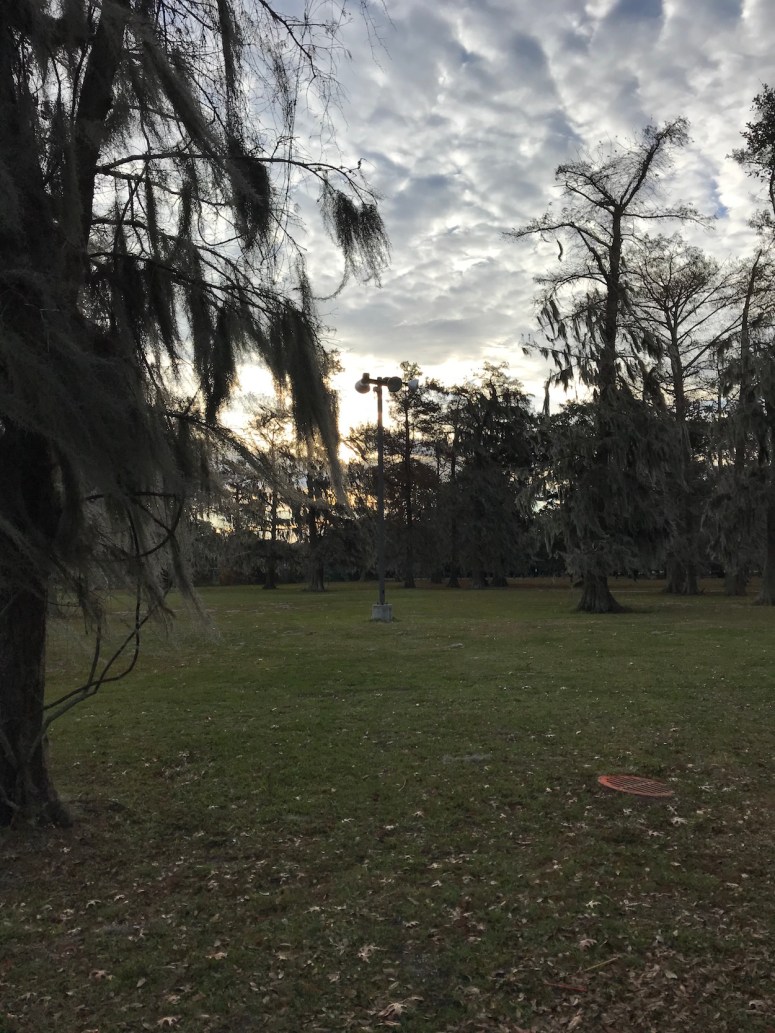
City Park, New Orleans, January 1, 2018

Wherefore no man grows wise without he have his share of winters—from The Wanderer, an Old English poem

As my first post of 2018, I was going to write something about how I resent New Year’s resolutions, yet feel compelled to make them anyway. And work in something about how I began this year as I began the last, with a walk in New Orleans’ City Park. But how the big difference was the weather.

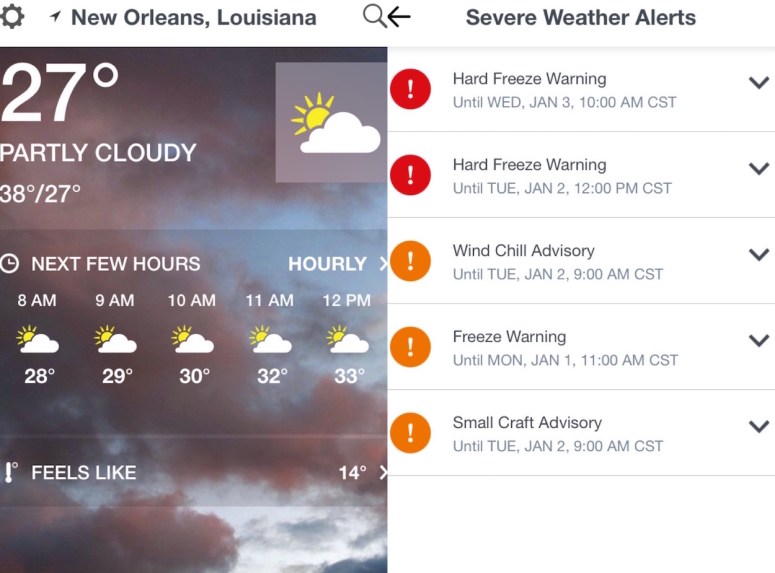
So, I’ll start there. It’s cold! From the morning of January 1:

Okay, okay, I know this is downright balmy compared to some spots in the Midwest and along the east coast. But it’s all relative, right? The average January temperature in New Orleans is a low somewhere in the ’40s, and a high in the ’60s. (Fahrenheit, of course.) See, my app said it felt like 14 degrees! And apps don’t lie. (Do they?) And how about all those hard freeze warnings!

Anyway, I bundled up and took my walk. It wasn’t so bad, except when the wind started to blow. That’s when it must have felt like 14 degrees. I got some nice wintry pics of City Park, so it felt worthwhile.

On to resolutions. They’re awfully “should-y.” As in, “I should exercise more, I should eat more healthily.” It always makes me think of Yoda’s admonition to Luke in The Empire Strikes Back: “No! Try not. Do, or do not. There is no try.” It’s like the difference between intention and resolution. I had intended (not resolved) to swim some laps (in an indoor heated pool) before work yesterday morning. But it was really cold, and it was tough to get out of bed, and my throat was a little sore (maybe from that cold walk). So I did not swim laps. Thanks to Yoda, and the line of demarcation between intention and resolution, I don’t feel like a failure. If I had resolved to swim laps, and hadn’t, then I might be feeling like a failure.

It’s also why I’m hesitant to apply resolutions to my writing. In 2018, I’ll see the conclusion of my eighth year of this fiction-writing journey. Early on, I made writing resolutions—both New Year’s and Lenten—to write something every day, or to finish a short story. Things along those lines. But as I’ve come to view writing as a vocation, resolving to do these things feels like resolving to show up to work when I’m scheduled. It’s an unnecessary resolution. Showing up at my job is something I just have to do, or do not. And be ready to face the consequences if I do not.

So that’s where I find myself this winter, this extra-cold start to 2018. I’m deep into the re-writes for my second novel. I need to make the time to finish these re-writes, in short order. I intend for my time spent “doing” to far outweigh my time spent “do not-ing.”

I’ll go back to the beginning to conclude this post. That quote about wisdom growing through your share of winters is something I remember from high school. I must have encountered it in English Lit, and it’s something that has stayed with me ever since. I hadn’t remembered that it pre-dates the Norman conquest of England—thanks for that, Google. While I’m not that old, I’ve seen at least thirty winters since I first read that line. I can only hope that I’m wiser now for having seen those winters through.