Fearful Symmetry

Photo by Marc Ignacio on Unsplash

Last Thursday, I was compelled to open up my copy of Watchmen to find one of my favorite panels in all of comicdom. And, no, I haven’t seen the HBO series, so that wasn’t what compelled me. It just called to me from my bookshelf.

It’s the symmetry of this particular panel that stays with me. I assume it was a magical combination of the talents of Alan Moore and Dave Gibbons that produced it. (Photo down at the end of this post. Warning: it depicts a significant amount of violence.)

After I found it, I started to dig deeper, and found myself down a pretty deep rabbit hole. Turns out, this panel is from Chapter 5: Fearful Symmetry. The symmetry of the use of symmetry led me to William Blake.

That term, “fearful symmetry,” is from William Blake’s poem “The Tyger.” Here’s the opening stanza:

Tyger Tyger, burning bright,
In the forests of the night;
What immortal hand or eye,
Could frame thy fearful symmetry?

Yes, I probably should have known the origin without having to look it up, but I’m glad I did, in any event. I found out a bunch of stuff about William Blake that I didn’t know before. And I plan to use that for next week’s post.

But this week, I’m sticking with the theme of fearful symmetry. So here are two fearfully symmetrical things that have occurred to me:

1) I watched the successful launch of the manned SpaceX Dragon capsule on television, while protests calling for justice for George Floyd and support of Black Lives Matter were occurring throughout the nation and beyond. I couldn’t help but draw comparison to the moonshot efforts of the 1960s, and the concurrent struggles of the Civil Rights movement. That’s the symmetrical part. As for the fear: has so little changed in 50 years?

2) Just about a year ago, I read “Southern Horrors: Lynch Law in all its Phases” by Ida B. Wells. For the symmetry here, I discovered Ida B. Wells was no stranger to epidemics. When she was 16, she tragically lost both her parents and a sibling to yellow fever. The fear is in the content of “Southern Horrors” — I am still struck by her clear-eyed account of lynchings as a barbaric means of repressing the economic progress of Black Americans. Ida B. Wells wrote this in the 1890s. Has so little changed in 130 years?


Macbeth: 100%

So, Macbeth had been on my TBR list for awhile. After plowing through Serial Reader’s 235 issues of War and Peace, I thought 10 issues of Macbeth would be a walk in the park. It was, mostly, thanks to a generous helping of internet assistance with the Elizabethan English. (The “litcharts” website was particularly helpful!)

I always enjoy discovering the context of famous quotes. For example, there’s the line that begins “Tomorrow, and tomorrow, and tomorrow, creeps in this petty pace from day to day…” and ends “…full of sound and fury, signifying nothing.” (I can easily picture and hear my Mom reciting this, especially the first part, even though she’s been gone over 5 years.) Well, this is Macbeth’s speech when he finds out his wife is dead. He pretty much says, “she was going to die sooner or later,” and then launches into that speech.

Kinda harsh. But this also comes in the last act of the play, when both Macbeth and Lady Macbeth were pretty far down the road to hell, anyway.

But one of the most interesting connections I made from reading Macbeth was one I wasn’t expecting. Very early on, in Scene 2 of Act 1, I encountered this quote:

“The multiplying villanies of nature / Do swarm upon him”

I immediately recognized it as something V says when he saves Evey in the beginning of V for Vendetta.

For the uninitiated, V for Vendetta (one of my favorite movies) is about a vigilante named “V” in a not-too-distant-future England, who dons a Guy Fawkes mask. Guy Fawkes is the best-remembered member of the Gunpowder Plot of 1605, when Catholic separatists attempted to assassinate King James and blow up Parliament. V in the movie, like a post-modern Guy Fawkes, attempts to overthrow the seriously oppressive government of this not-too-distant-future England.

So here’s what I wasn’t expecting: there’s possibly a much stronger connection between Macbeth and V for Vendetta than just the use of some quotes.

Shakespeare wrote Macbeth in 1606, and some believe he wrote it to remove any suspicion of connection between himself and the people behind the Gunpowder Plot. Shakespeare’s mother was Catholic, and his father might have been a covert Catholic. His father was also friends with the father of one of the main conspirators, Robert Catesby. And, Shakespeare frequented the Mermaid Tavern, where the plotters met (to plot, apparently).

There’s a lot of stuff in Macbeth that would have appealed to King James. Take the noble character Banquo, whom the witches say will never be king, but will beget kings. Banquo is supposed to represent King James’s ancestor Banquho, Thane of Lochquhaber. And then the witches themselves — King James wrote a book about witchcraft, so he was obviously pretty interested in the subject.

Now, just how much “c.y.a.” was involved in Shakespeare’s motivation for writing Macbeth, we’ll never know. But it’s got me examining my own motives for writing a little more closely.

The Universe in Verse

This past Saturday, I watched a livestream. Perhaps my first ever. The event was The Universe in Verse, billed as “a charitable celebration of science and nature through poetry.” (Here’s a link with more info from Pioneer Works, the Brooklyn-based cultural center that puts on the show: The Universe in Verse.)

There were two names on the program that got me to tune in: Janna Levin and Rebecca Solnit. I saw Janna Levin speak at Tulane University several years ago, and picked up a copy of her book Black Hole Blues and Other Songs from Outer Space. And Rebecca Solnit is a writer whom I greatly admire.

Oh, and these other names helped sell me on the prospect of spending Saturday afternoon in front of my laptop: Kip Thorne, Brian Greene, Roxane Gay, Neil Gaiman, and Jad Abumrad.

At over three hours, I was glad I was watching a livestream versus an in-person event. I could carry my laptop around with me as I did stuff around the house. And by the end, I was happy to have experienced it. It helped get my head in a better place.

Some highlights for me: watching Rebecca Solnit read a lovely poem (I don’t remember which one) in front of an oak tree, somewhere out in California, I think. I’d never seen her before, I’ve only read her, and she had a very compelling presence. And Janna Levin, who opened the event (she’s on the Board of Directors for Pioneer Works) got me thinking back to an inspiration I had, when I saw her here 4 years ago. She told a story about something that happened during the construction of LIGO (the two observatories that detected gravitational waves — one of them just happens to be here in Louisiana). I’ve only just started getting that inspiration out of my head and onto the page, and this event reminded me that I’ve got to make the time for it.

I’ll leave you with one of the poems that stood out to me — it’s a short one. It was read by Krista Tippett of the radio program “On Being.”

The Peace of Wild Things
by
Wendell Berry

When despair for the world grows in me
and I wake in the night at the least sound
in fear of what my life and my children’s lives might be,
I go and lie down where the wood drake
rests in his beauty on the water, and the great heron feeds.
I come into the peace of wild things
who do not tax their lives with forethought
of grief.  I come into the presence of still water.
And I feel above me the day-blind stars
waiting with their light. For a time
I rest in the grace of the world, and am free.

Alternate Timelines

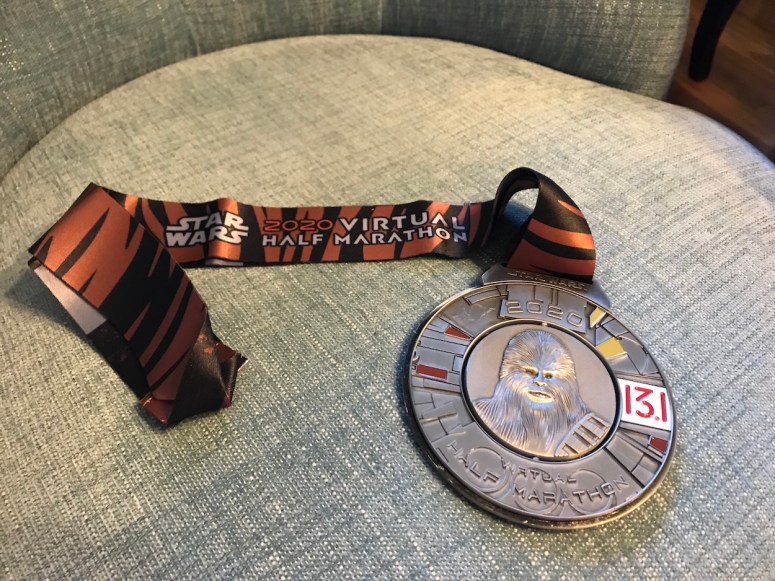
Souvenir from the Wookieeverse

The concept of alternate timelines, or alternate realities, has always been somewhat second nature for me. Or, alternate nature, perhaps.

When I first learned about the multiverse, the hypothesis that there is not only one universe, but an infinite number of universes, my first reaction was, “Of course! Why wouldn’t there be?”

I think I’m just wired that way. Space and time — time especially — has always felt like a construct to me. Something like scaffolding.

Why am I going on about alternate realities? They’ve been on my mind these past few days. In another timeline, I would have been in Disney World with nieces Nicole and Cece this past weekend. Running the Star Wars half-marathon. But that just may be a delayed timeline, since we’re planning to run this race next year, instead. And we still got medals for running a “virtual” half-marathon.

And if I had been in Florida this past weekend, I wouldn’t have had the opportunity to go through a long-neglected box of stuff. Where I found piles of evidence of my own alternate realities. (In reality: past realities.) Day planners, wall calendars — things I had no business hanging onto for as long as I had.

I disposed of most of them, but couldn’t bring myself to part with some of the very earliest ones. The most ancient artifact from that timeline is pictured below.

A couple of friends came immediately to mind as I found that 1981 Hallmark date book. Not friends I had back in that day, but friends I have now. One of whom would have been a wee bairn in April 1981, and the other who would not make her debut until October of that year. (I mean being born, not making her society debut.) I was 11 for most of 1981, and from my perspective, it was a good year to be 11. I’m glad to have memories of that year.

Even though they might just be a fabrication. 😉

Interesting how I marked the track meet. It would be years before I found my stride as a distance runner.

206 Years Ago

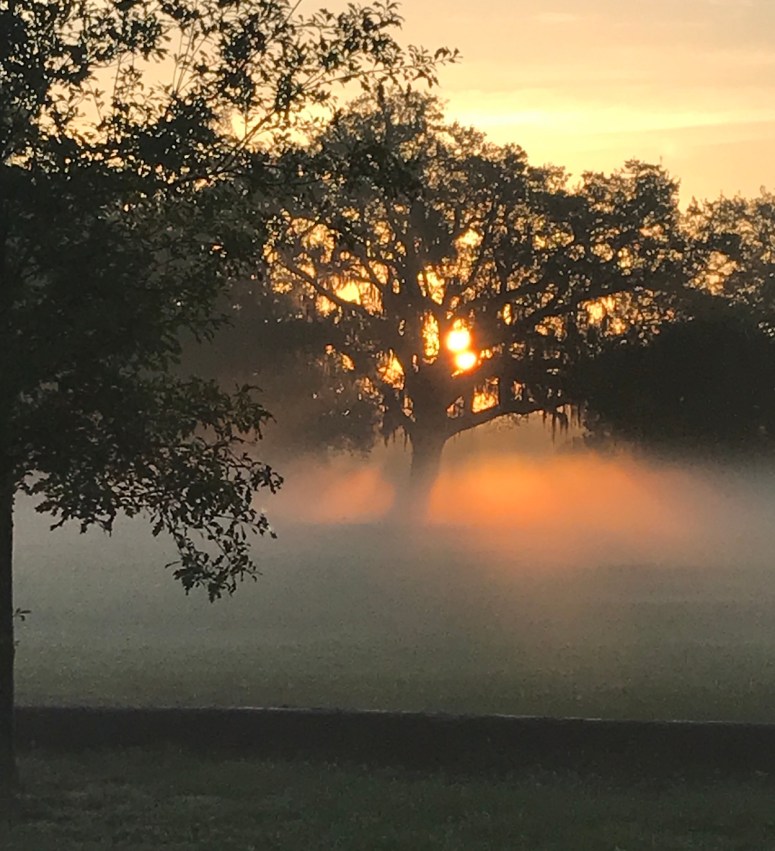
Sunrise, April 13, 2020.

On April 11, 1814, Napoleon Bonaparte abdicated the throne of the French empire, and was sent off to exile. The first time he was exiled, it was to the relatively accessible island of Elba in the Mediterranean. (Those seeking to be done with him would not repeat the mistake — the second and final time he was exiled, it was to the island of Saint Helena in the south Atlantic Ocean. This place is exceedingly remote, even by today’s standards.)

I feel like I’ve spent a lot of time with Napoleon in the past year. I read The Count of Monte Cristo in the middle of 2019, and that book is set in the immediate aftermath of Napoleon’s reign. And Napoleon’s all over War and Peace. I’m 89% of the way through Tolstoy’s epic, and currently in the story, it’s October 1812 and Napoleon is hightailing it out of Russia.

Napoleon’s doings seemed to be the cause of a lot of uncertainty back in the day. I’d never really thought of it that way before, I think because I tend to look back at history as a concrete thing. “This happened, and then this happened because of it, and these were the effects.” But reading War and Peace has put me right back in that time, as only good fiction can. I felt the uncertainty of the characters as Napoleon’s army came into Moscow, and I feel it as the French abandon a burnt-out city and country.

It’s hard not to draw parallels with our current level of uncertainty.

So on Saturday, when I read that it was the 206th anniversary of Napoleon’s abdication, it had a little more impact than if I had not spent the better part of this past 12 months in Napoleon’s world. It was like a reminder of the fact that the French really did leave Russia, and Napoleon was forced from public life, eventually. And, oh yeah, he’s been dead for almost 200 years.

The live oak pictured at the top of this post could have been around 200 years ago. It’s not far from some oaks that are believed to be between 750 and 900 years old. While it may not be too long before we can all say, “this is what happened as a result of our 21st century pandemic, and these were the effects,” that’s little consolation for our immediate anxiety. Thinking of what that tree may have been around for, and seeing it still standing strong, makes it feel like a beacon of hope.

Nearsight

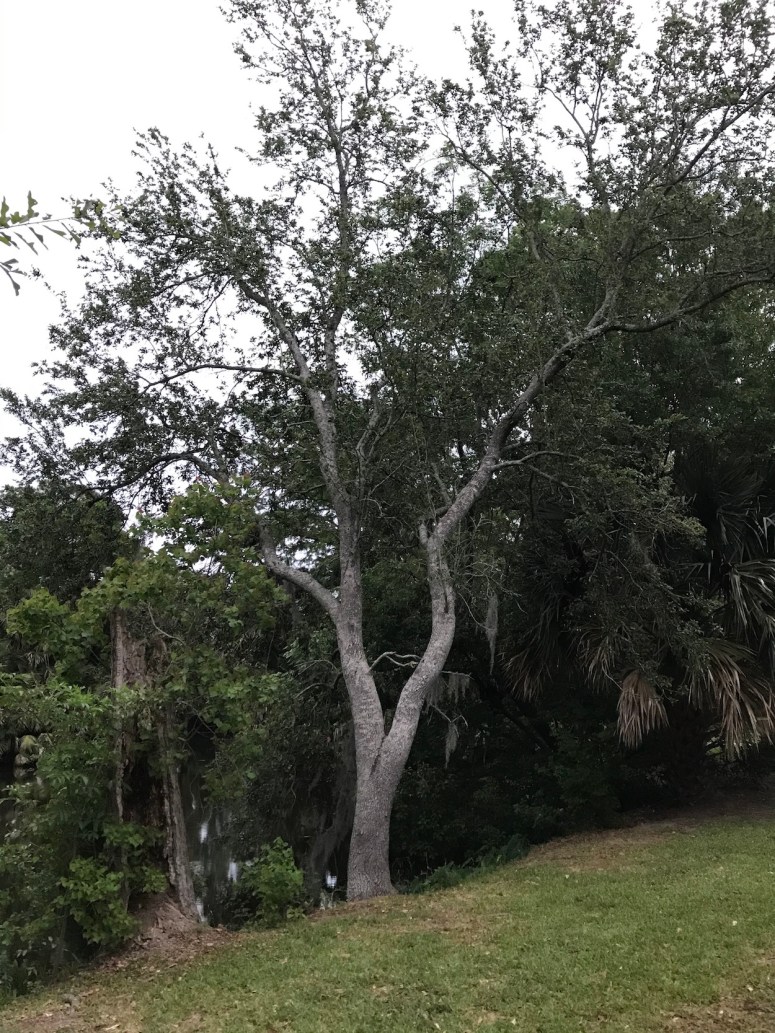
Noticed this tree for the first time yesterday, even though I’m sure I’ve passed it dozens of times. It seemed to be responding to the predominantly gray light in the sky.

So, I’ve had these quotes appear in front of me in the span of just a few days:

“One’s destination is never a place, but rather a new way of seeing things.” — Henry Miller

“When you change the way you look at things, the things you look at change.” — Dr. Wayne Dyer

Kinda getting the feeling, maybe I might be due for a lens change?

I’ve been nearsighted most of my life. I think I was 10 years old when I first got glasses. I had Lasik surgery about 12 years ago, but its effectiveness is beginning to wane as my eyes age along with the rest of me.

And it feels like nearsightedness is a pretty big issue right now. The path forward seems very blurry. What is the world going to look like tomorrow, next week, next month? In non-pandemic times, many of us can make reasonable assumptions about the future and its shape. Not so much right now.

So I’m going to try to quiet down and stop asking those questions for a while. Maybe in the silence, a different kind of question will present itself. A new way of seeing things.

One Sunrise, Three Ways

So, I had lots of ideas for today’s post, like: sharing some of the nicer and/or funnier COVID-19 communications I’ve received from a myriad of sources; or a Quarter Report, since today is the start of the second quarter of 2020; or a handful of other thoughts not worth mentioning.

But, for many reasons, none of these ideas materialized. Instead, I’ll share these pictures of the sunrise on Monday, March 30. Captured at 6:54 a.m. Central Time. Not shared on any other social media (until now).

And also, this quote, which has been in my head a bit, that I remember as such:

“For this command I enjoin on you today is not too mysterious or remote; it is already in your head, and in your heart — you have only to carry it out.”

(If you’re curious, it’s from the Book of Deuteronomy. Chapter 30, Verse 11. I couldn’t find a Bible excerpt that matches those words exactly, [they’re closest to the New American Bible], but they definitely carry the gist.)

2020 TCS New York City Marathon

So, I did a thing. I signed up for the 2020 TCS New York City Marathon. November 1. About eight months away.

Hmmm.

Marathons are tough. I’ve run three of them. All in the decade between thirty and forty years old. In the decade between forty and fifty, the mechanics of my mortal coil started complaining, more loudly. A case of sciatica, or something like it, sidelined my running for a few years. I have long had the New York City Marathon in my sights — something about running through all five buroughs really appeals to me. I even mentioned it in this blog four years ago, in “Writing and Running” (click here). But that post was written before I temporarily gave up running. In the years since, I wasn’t sure another marathon would be possible. I’m certainly not getting any younger.

My running expectations were in need of an edit.

Nieces Nicole and Cece have helped that editing process. I wrote about a 10K race we ran together at the end of last year (click here), which was in preparation for a half marathon we are running together in April. For that upcoming race, I knew I had to get my legs used to the miles again. And while I’ve been getting used to the miles, I realized that it would be quite possible to run another marathon.

Pictured above are the results of my run last Sunday. My average pace is a lot slower than it used to be. But I figure at that pace, which was very comfortable, I could finish the marathon in less than six hours. I’d be more than okay with that.

I feel like it’s no coincidence that the decade where my running got adjusted is the same decade when I began writing in earnest. There have been so many concurrent lessons about putting in the effort, adjusting expectations, and finally, doing something just because you love it (with all the joy and heartache that entails) and because it offers fulfillment.

In writing and running, I’m going the distance.

Mardi Gras and Lent

Marking the Mardi Gras season at our door.

Today is Ash Wednesday, the start of Lent. Yesterday was the end of all the festivities that make up the Mardi Gras season in New Orleans.

I’ve come to realize over the course of many years of adulthood that Lent fits into my lifestyle more easily than Mardi Gras does. Especially my writing lifestyle. When you work full-time, and focus on writing during your “margin” times, I look to the weekends to make progress on my works-in-progress. Or at least think about making progress while I’m doing laundry and other stuff I tend to save for the weekends.

This year, I made a conscious effort not to feel guilty or anxious about the writing I don’t do over Mardi Gras. I had some success; I certainly felt more at ease with the frivolity this year than I have in years past. That writing anxiety is pretty much antithetical to the whole spirit of Mardi Gras, and I would hate to be against the spirit of the season.

Making progress on positive, life-affirming goals — writing and otherwise — is what Lent is for, anyway.

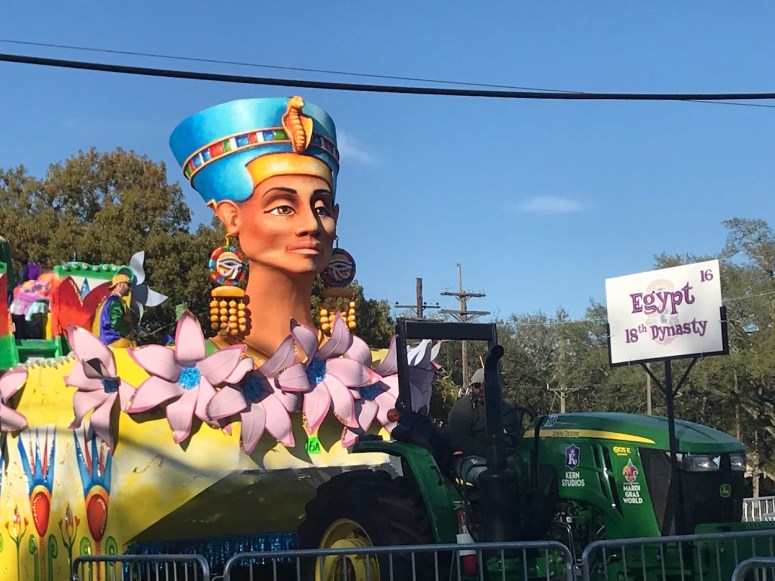
Every Saturday before Mardi Gras, the Endymion parade turns our neighborhood into one big block party. Stared at this float while waiting for the parade to start.
Touring the neighborhood Saturday, captured this gorgeous tree in bloom. Not sure if it’s a Japanese Maple, Elm or other.
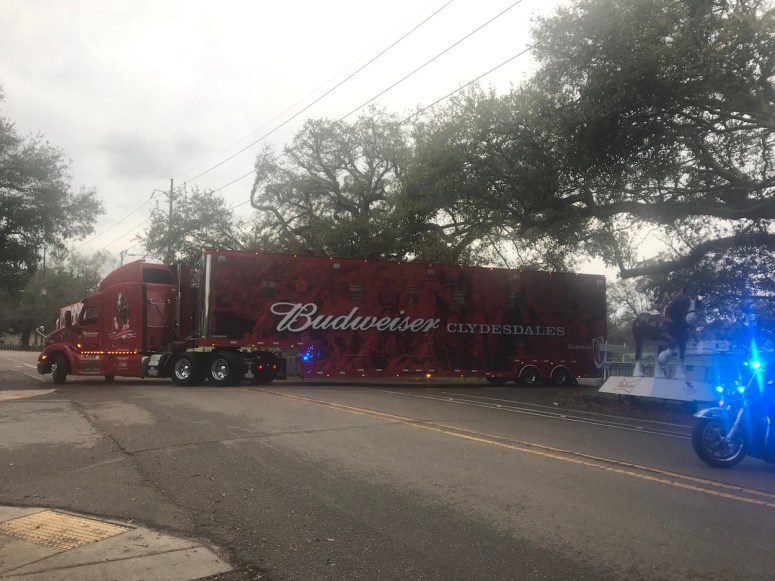
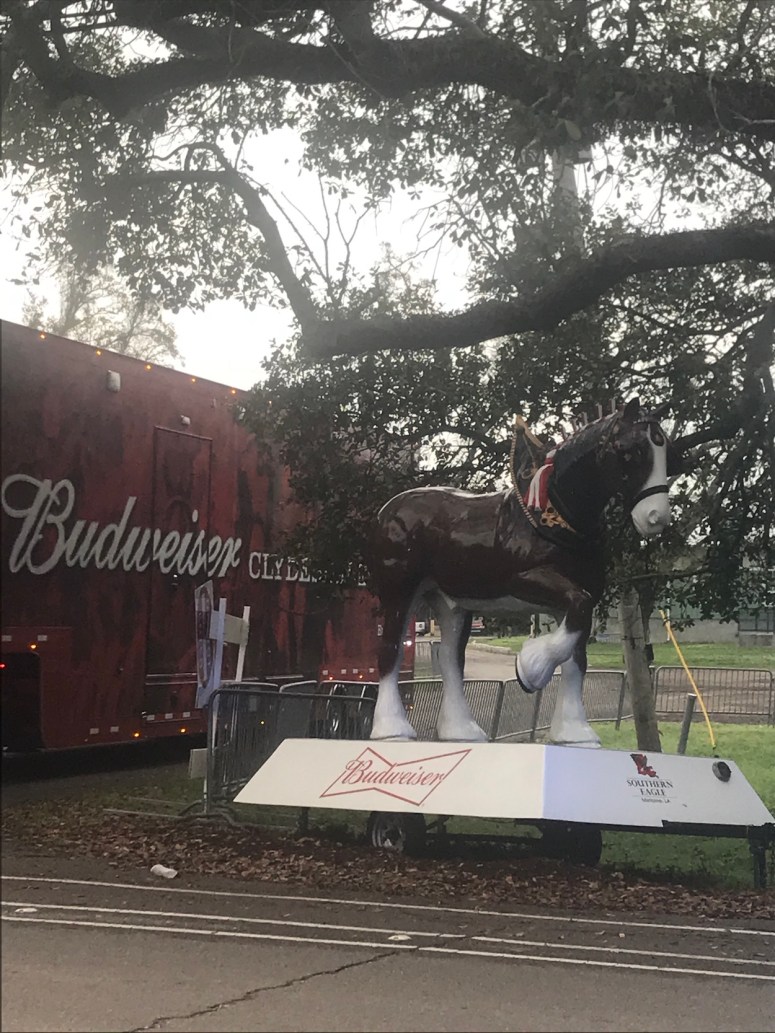
Early Mardi Gras morning, I watched the Clydesdales load up and head out toward the parades.

Spring Festival

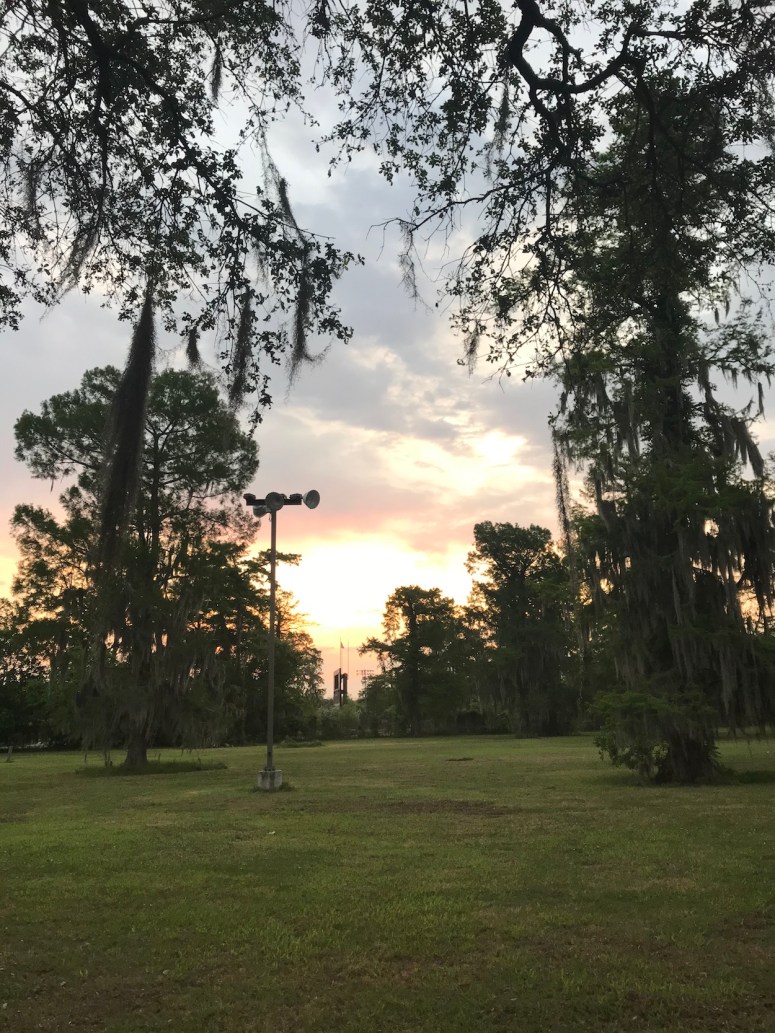
Sunrise on January 25, 2020, New Orleans City Park

This past Saturday marked the start of a new year. We ushered in the Year of the Rat by the Lunar, or Chinese, New Year. A few observations regarding this new year, from the past week or so:

  • I’ve been told the Chinese word for rat and mouse is the same — it does not differentiate the rodent the way our English words do. I’ve also been told that Disney, sensing a huge marketing opportunity, is going all in with “Year of the Mouse.” I’m headed to Disney World in April, so I’ll let you know how this manifests in the park.
  • This from the website Daily Om: the Year of the Rat “brings with it the promise of prosperity.” Also, “Since the rat sign is the first in the Chinese zodiac calendar, we may feel the energy of a cycle beginning. We may also feel a pioneering spirit that helps us to forge ahead with a completely new endeavor.” The “energy of a cycle beginning” ties in nicely with the start of this decade, and also coalesces with a certain hopeful vibe I’ve been feeling since the start of 2020. (Yes, I pay attention to vibes. This is a trait which I’ve found it’s useless to try to ignore. It also has a significant influence on my writing.)
  • Tying into hopeful vibes, the New Year’s holiday is celebrated as a week-long “Spring Festival” in China. (The company I work for has an office in China, and our global calendar has January 24-30 blocked out as Spring Festival for that location.)
  • I like the idea of heralding spring. We’re still about two months out from the official start, but we know it’s coming, sure as the Earth continues its annual loop around our star. And even though winter in New Orleans probably feels like spring to most of the rest of the country, we can still get wintry days, and things don’t grow like they do in spring and summer. I’m looking forward to seeing what blossoms this hopeful vibe the Year of the Rat (Mouse) produces.